
How do you train lab staff to work alongside automated systems?
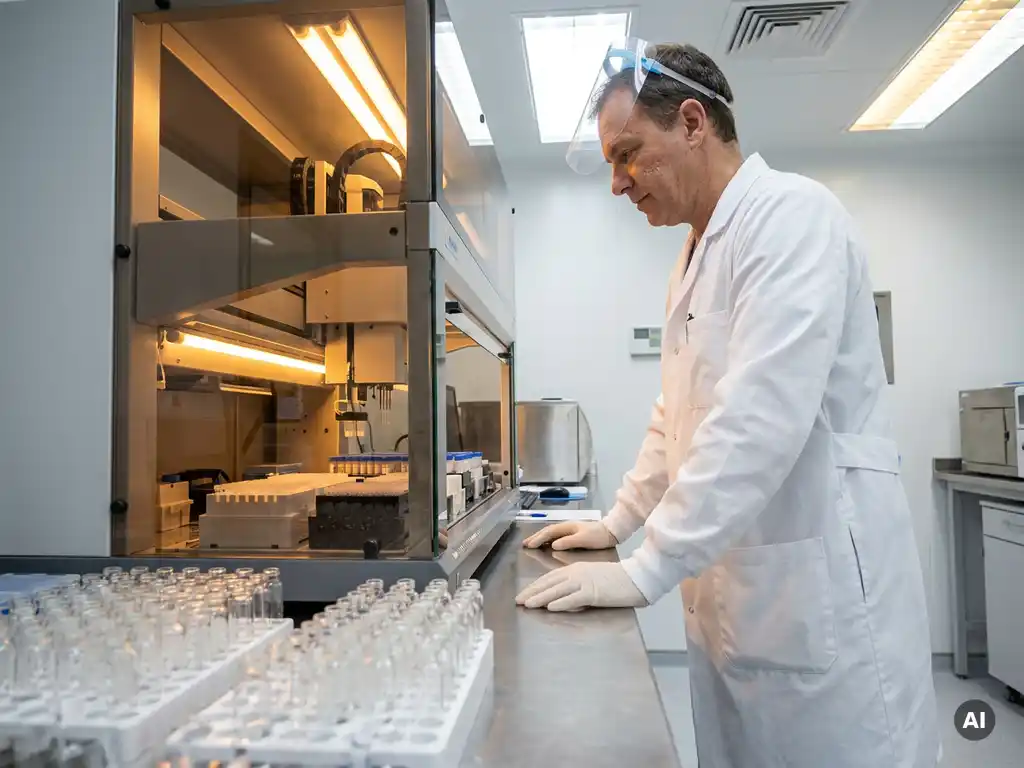
Training lab staff to work alongside automated systems requires a structured approach that combines technical instruction, hands-on practice, and a shift in how analysts understand their role. Staff no longer operate every step manually; instead, they oversee, verify, and troubleshoot systems that handle the repetitive, high-precision work. The sections below address the most common questions labs ask when planning or improving their automation training programs.
What skills do lab staff need to operate automated sample preparation systems?
Lab staff working with automated sample preparation systems need a combination of instrument literacy, analytical understanding, and systematic troubleshooting ability. They must be able to configure and monitor the system, recognize when results fall outside expected parameters, and intervene appropriately without disrupting ongoing runs or compromising sample integrity.
The specific skills that matter most fall into three broad areas:
- Instrument operation: Understanding how the system loads, sequences, and processes samples. This includes familiarity with software interfaces, run parameters, and calibration routines.
- Analytical knowledge: A working understanding of the chemistry involved, for example, knowing why solvent volumes, flow rates, and column conditioning matter when running SPE-based cleanup for PFAS or persistent organic pollutants.
- Data interpretation: Reading system logs, identifying anomalies in output data, and knowing when to flag results for review rather than accepting them automatically.
Soft skills matter too. Staff who adapt well to automation tend to be methodical, comfortable with documentation, and willing to ask questions when something looks unexpected. Curiosity about the underlying process, not just button-pressing, is what separates a capable operator from an exceptional one.
How does automated sample preparation change day-to-day lab workflows?
Automated sample preparation shifts lab workflows from manual, step-by-step execution to a supervisory and quality-assurance model. Analysts spend less time performing repetitive extraction and cleanup steps, and more time on scheduling, system monitoring, data review, and method optimization. The rhythm of the working day changes significantly.
In a manual workflow, a technician might spend several hours on a single batch of samples, measuring solvents, loading cartridges, and monitoring each step. With automation, that same batch can run largely unattended. This frees up time, but it also means that bottlenecks shift: instead of extraction being the slow step, data review and instrument maintenance often become the new time constraints.
For labs analyzing environmental contaminants such as dioxins, PCBs, or PFAS, the change is especially pronounced. Systems that handle solvent-intensive cleanup automatically reduce the direct exposure analysts have to organic solvents, and the consistency of automated runs reduces the batch-to-batch variability that manual preparation can introduce. Staff may find that their attention moves upstream, toward sample intake, logging, and QA checks, and downstream toward instrument maintenance and result validation.
The key adjustment for most lab teams is psychological as much as technical: learning to trust the system while maintaining rigorous oversight. Automation does not eliminate human judgment; it relocates it.
What does an effective training program for lab automation look like?
An effective laboratory automation training program is structured in phases: foundational theory, supervised hands-on practice, independent operation under observation, and ongoing competency assessment. It is built around the specific system being deployed and the analytical methods it will support, rather than generic instrument training.
Phase one: foundational understanding
Before staff touch the instrument, they need to understand what it does and why. This means covering the analytical principle behind the system, for example, how solid-phase extraction works, what the cleanup steps are removing, and what can go wrong at each stage. Staff who understand the chemistry are far better equipped to recognize problems than those who only know the procedure.
Phase two: supervised hands-on operation
Practical training should begin with guided runs using representative sample types. A trainer, whether from the vendor or an experienced internal operator, walks staff through setup, run initiation, monitoring, and shutdown. Error scenarios should be introduced deliberately: what happens if a cartridge blocks, how does the system alert the operator, and what is the correct response?
Phase three: independent operation with review
Staff then run the system independently, but results are reviewed by a senior analyst or the trainer. This phase builds confidence while catching gaps in understanding before they affect real samples. Documentation habits, logging runs, flagging anomalies, recording maintenance, should be embedded at this stage.
Phase four: ongoing assessment
Training does not end after initial qualification. Regular competency checks, refresher sessions when methods change, and structured review of any out-of-specification results keep skills sharp and ensure that good practices do not erode over time.
How long does it take to train lab staff on a new automated system?
Most lab staff reach basic operational competency on a new automated sample preparation system within one to two weeks of hands-on training. Reaching full proficiency, including the ability to troubleshoot independently, optimize methods, and train others, typically takes between one and three months, depending on the complexity of the system and the analyst’s prior experience.
Several factors influence the timeline:
- Prior automation experience: Staff who have worked with any automated platform before adapt faster, even if the new system is different.
- Analytical background: Analysts who understand the chemistry behind the method require less time on theory and can focus on instrument-specific operation.
- System complexity: A multi-step platform handling extraction, cleanup, and concentration across varied matrices takes longer to master than a single-function system.
- Training intensity: Concentrated, hands-on training with a qualified trainer compresses the timeline significantly compared to self-directed learning from manuals.
Labs should resist the temptation to declare staff “trained” after a vendor demonstration or a single guided run. Real competency requires repeated independent operation across a range of conditions, including the less common scenarios that will inevitably arise in routine use.
What are the most common mistakes labs make when introducing automation?
The most common mistake labs make when introducing automation is underinvesting in training while overestimating how intuitive the system will be. A sophisticated automated platform does not run itself; it requires staff who understand both the instrument and the analytical method it supports. Skipping or shortening training to meet a deployment deadline creates problems that take far longer to resolve than the training would have taken.
Other frequent errors include:
- Failing to update SOPs: Automated workflows require new standard operating procedures. Using manual-era SOPs with an automated system creates confusion and compliance gaps.
- Neglecting maintenance training: Staff are often trained to operate a system but not to maintain it. Routine maintenance, cleaning, checking seals, replacing consumables, is critical to system performance and is often the first thing that slips.
- Treating automation as a black box: When staff do not understand what the system is doing at each step, they cannot recognize subtle errors. A run that completes without an error message is not necessarily a run that produced valid results.
- Inadequate method transfer: Moving a validated manual method to an automated platform requires careful verification. Assuming the results will be equivalent without running a proper comparison is a common and costly assumption.
- Training only one person: If a single operator holds all the system knowledge, any absence creates a bottleneck. Cross-training at least two or three staff members on every system is essential for operational resilience.
Should labs use vendor training or develop in-house programs?
Labs should use vendor training as the foundation and build in-house programs on top of it. Vendor training provides system-specific knowledge that no internal resource can replicate at the point of installation; engineers and application specialists understand the instrument’s design, failure modes, and optimal configuration in ways that general laboratory knowledge cannot substitute. In-house programs then adapt that knowledge to the lab’s specific methods, matrices, and regulatory context.
Vendor training is strongest for instrument operation, software navigation, and initial method setup. It is typically less tailored to the lab’s specific sample types, reporting requirements, or internal quality systems. That gap is where in-house training adds the most value.
A practical approach is to designate one or two staff members as system champions who receive the most intensive vendor training. These individuals then develop internal training materials, run competency assessments for colleagues, and act as the first point of contact for operational questions. This model scales well as labs grow their automation footprint and reduces dependence on external support for routine issues.
When evaluating suppliers, it is worth asking specifically what training is included: is it on-site or remote, how many staff can attend, and is follow-up support available after the initial period? The quality and depth of vendor training support is a meaningful differentiator when selecting an automated sample preparation system.
How DSP-Systems supports lab automation training and onboarding
DSP-Systems goes beyond supplying automated sample preparation equipment; the company provides the technical support and expertise labs need to get their teams fully operational and confident from day one. For laboratories introducing systems such as the GO-EHT, SPE2000, or AutoEmpore, DSP-Systems offers:
- On-site installation, commissioning, and application testing tailored to the lab’s specific sample matrices and target analytes
- Method development and validation support for dioxins, PCBs, PFAS, PBDEs, pesticides, and other contaminants
- Structured training courses designed for laboratory staff at all levels of automation experience
- Turnkey lab setup services for organizations building or scaling internal contaminant analysis capabilities
- Ongoing technical support to address operational questions as staff grow into independent system users
Whether your lab is deploying its first automated platform or expanding an existing workflow, DSP-Systems provides the hands-on guidance that makes the difference between a system that sits underutilized and one that delivers consistent, high-quality results. Contact DSP-Systems to discuss your training and onboarding needs.
Veelgestelde vragen
Can lab staff with no prior automation experience be trained to operate automated sample preparation systems?
Yes, staff with no prior automation experience can absolutely be trained to competency — it simply requires a more structured onboarding approach that starts with foundational theory before moving to hands-on operation. Labs should expect a slightly longer ramp-up period (closer to the two-to-three month mark for full proficiency) and should pair newer staff with an experienced mentor or system champion during the early independent operation phase. The most important quality is not prior automation experience but analytical curiosity and a methodical mindset.
How should labs handle training when a new method or matrix is added to an existing automated system?
Adding a new method or matrix to an existing automated system should trigger a targeted retraining cycle, even for experienced operators. This includes a review of any updated SOPs, a supervised validation run comparing automated results against known reference values, and a formal sign-off before the new method enters routine use. Treating method additions as mini-deployments — with their own verification and documentation steps — prevents the assumption that existing competency automatically transfers to new analytical conditions.
What documentation should labs maintain to demonstrate staff competency on automated systems?
Labs should maintain training records that include the date and scope of each training session, the trainer’s identity, and a record of any competency assessments or proficiency runs completed. For regulated environments, this documentation should also capture method-specific qualifications, so it is clear which staff members are authorized to run which methods on which systems. Linking competency records to instrument logs and QC data creates a traceable chain that supports both internal audits and external accreditation reviews.
What's the best way to keep automation skills sharp after initial training is complete?
The most effective approach combines scheduled refresher sessions with structured review of any out-of-specification results or system anomalies that occur in routine use. Treating every deviation as a learning opportunity — holding brief team debriefs to discuss what happened and what the correct response was — reinforces good practices without requiring formal retraining. Labs should also schedule competency reassessments whenever there is a significant system update, a software change, or a gap in an individual operator’s active use of the system.
How do you troubleshoot a completed run that shows no error messages but produces questionable results?
When a run completes without triggering an error but results look suspect, the investigation should start with the system log rather than the analytical data — reviewing flow rates, solvent volumes dispensed, timing between steps, and any sensor readings that fall near the edge of acceptable ranges. Common culprits include partially blocked cartridges that didn’t fully trigger an alert, minor solvent volume deviations that accumulated across a batch, or conditioning steps that completed in time but at reduced efficiency. This is precisely why training staff to understand the underlying chemistry matters: operators who know what each step is doing are far more likely to connect a subtle log anomaly to an unexpected result.
Is it worth investing in automation training if the lab only runs a limited number of samples per week?
Yes — throughput volume is only one of the reasons labs adopt automated sample preparation. Consistency, analyst safety (particularly relevant for solvent-intensive methods like dioxin or PFAS cleanup), and regulatory defensibility are equally important drivers, regardless of sample volume. Even lower-throughput labs benefit from the reduced batch-to-batch variability and the freed-up analyst time that automation provides, but only if staff are properly trained to operate and maintain the system. An undertrained operator on a low-volume system creates the same compliance and data quality risks as one on a high-volume platform.
How should labs evaluate whether their current training program is actually working?
The clearest indicators are operational: track the frequency and type of system errors, the rate of out-of-specification results, the time staff take to resolve common issues independently, and whether maintenance tasks are being completed on schedule. If staff regularly escalate issues that should be within their competency to resolve, or if QC failures cluster around specific operators or shifts, those are signals that the training program has gaps worth addressing. Periodic blind competency checks — where a staff member runs a known sample without being told it is an assessment — can also reveal whether skills are being maintained between formal review cycles.
Gerelateerde artikelen
- How does automated sample preparation reduce analyst-to-analyst variability?
- What is the difference between offline and online automated sample preparation?
- How do you scale laboratory automation as sample volumes grow?
- What are the most common automated sample preparation techniques?
- What is the difference between manual and automated sample preparation?
Deze inhoud is gegenereerd met behulp van AI en kan fouten bevatten.