
Can automated sample preparation support method development workflows?
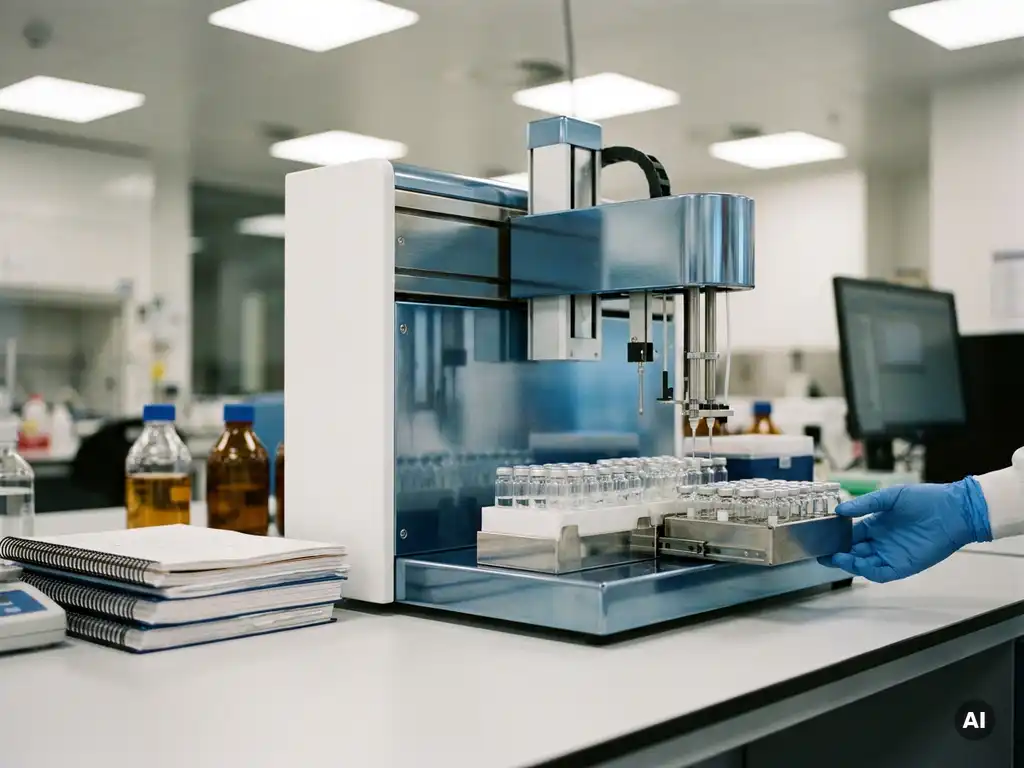
Yes, automated sample preparation can meaningfully support method development workflows. Automation brings consistency, speed, and parameter control to the iterative process of developing and validating analytical methods, qualities that are difficult to achieve with manual techniques alone. The sections below address the most common questions laboratories ask when considering automation for method development.
What method development steps benefit most from automation?
The steps that benefit most from automation in method development are extraction, cleanup, and concentration, the stages where variability is highest and parameter control matters most. These are the steps where small inconsistencies in technique, timing, or solvent volume can produce results that are difficult to interpret or reproduce across analysts and days.
During extraction, automated systems apply consistent flow rates, contact times, and solvent volumes across every sample in a batch. This removes the analyst-to-analyst variability that complicates early-stage method development, where the goal is to isolate the effect of one parameter at a time. When a system like the SPE2000 automated platform processes samples under identical conditions, any differences in recovery are attributable to the method parameters being tested rather than operator technique.
Cleanup and purification steps are similarly well-suited to automation. For complex matrices such as food, feed, or environmental soil samples, automated cleanup systems apply precise solvent sequences that would be difficult to replicate manually at scale. Concentration steps, where solvent is evaporated to a defined end volume before instrumental analysis, also benefit from automation because over- or under-concentration directly affects quantitative results.
- Extraction: Consistent solvent volumes, contact times, and flow rates across all samples
- Cleanup and purification: Reproducible solvent sequences for complex matrices
- Concentration: Precise evaporation to defined end volumes for GC or LC injection
- Spiking and standard addition: Accurate and consistent addition of internal standards
How does automation improve reproducibility during method development?
Automation improves reproducibility in method development by eliminating human variability from the most error-prone steps in sample preparation. When every sample in a batch is processed under the same mechanical conditions, identical flow rates, temperatures, solvent volumes, and timing, the resulting data reflects the method itself rather than differences between analysts or processing sessions.
Reproducibility is the foundation of method validation. Before a laboratory can demonstrate that a method meets regulatory acceptance criteria for precision, accuracy, and recovery, it needs a preparation workflow that produces consistent outputs. Manual techniques introduce micro-variations that can be mistaken for method instability, forcing unnecessary iterations during development.
Automated systems also enable direct comparability between runs conducted on different days or by different team members. In laboratories working toward ISO 17025 accreditation or preparing methods for submission under EU or EPA frameworks, this inter-run consistency is not optional: it is a documented requirement. Automation makes that consistency achievable from the earliest stages of development rather than something that must be engineered in after the fact.
For contaminant analyses involving persistent organic pollutants such as dioxins, PCBs, or PFAS, where regulatory thresholds are extremely low and matrix interference is significant, reproducibility during cleanup is especially critical. Automated purification systems apply the same solvent elution sequence every time, reducing the risk that inconsistent cleanup is masking or inflating recovery values during method optimization.
Can automated systems handle multiple matrices during method development?
Yes, modern automated sample preparation systems are designed to handle multiple sample matrices, making them well-suited to the multi-matrix method development that environmental and food safety laboratories routinely perform. The key is that parameters such as cartridge type, solvent volume, flow rate, and elution sequence can be programmed independently for each matrix type and stored as method files.
This programmability is particularly valuable during method development, when a laboratory may be simultaneously optimizing a procedure for soil, water, food, and biological samples using the same target analytes. Rather than rebuilding the workflow from scratch for each matrix, analysts can modify stored parameters and run comparative experiments efficiently.
For large-volume water samples, systems with multi-channel configurations allow parallel processing of multiple samples in a single run, which accelerates the comparison of extraction conditions across matrices. For solid and semi-solid samples such as food, feed, or sludge, extraction systems based on established principles like the Randall method can be integrated with automated cleanup platforms to create a seamless, end-to-end workflow that spans multiple matrix types.
The ability to switch between sample racks and cartridge sizes without major reconfiguration also reduces the time cost of multi-matrix work. Laboratories developing methods for emerging contaminants such as PFAS or PBDEs across diverse matrices benefit directly from this flexibility, as method development in these areas often requires rapid iteration across matrix types before a final validated procedure is established.
How does automated sample preparation reduce solvent use in method development?
Automated sample preparation reduces solvent consumption in method development by applying precise, pre-programmed solvent volumes at each step, eliminating the excess solvent that manual techniques often require to compensate for imprecision. Systems designed for environmental contaminant analysis can process samples using less than 100 mL of organic solvent per sample, and many operate without dichloromethane entirely.
This matters during method development for two reasons. First, reduced solvent use lowers the cost and safety burden of running large numbers of optimization experiments. Method development is inherently iterative: it requires multiple runs with varied parameters, and solvent costs accumulate quickly when working manually. Second, lower solvent volumes reduce the evaporation time needed to concentrate extracts to the required injection volume, which compresses the overall sample preparation timeline.
Automated extraction systems also recover solvents during the process, collecting them in recovery tanks rather than releasing them as waste. This reduces both disposal costs and environmental impact, which is increasingly relevant as laboratories face pressure to demonstrate sustainable analytical practices alongside regulatory compliance.
For laboratories developing methods for PFAS analysis specifically, solvent selection and volume control are especially sensitive parameters. PFAS compounds can be introduced through contaminated solvents or excessive contact with certain materials, making precise, minimal solvent use a method quality issue as well as an environmental one. Automated systems with inert flow paths and controlled solvent delivery address both concerns simultaneously.
When should a laboratory transition from manual to automated method development?
A laboratory should consider transitioning to automated sample preparation for method development when manual variability is limiting data quality, when throughput requirements exceed what manual processing can support, or when the method being developed involves analytes or matrices that demand a level of precision and cleanliness that manual techniques cannot reliably deliver.
Practically, the transition point often becomes clear when a laboratory observes high relative standard deviations in replicate samples that cannot be explained by instrumental variation, when analysts spend a disproportionate amount of time on preparation rather than analysis, or when method transfer between analysts produces inconsistent results. These are symptoms of preparation-driven variability, and automation directly addresses them.
Laboratories developing methods for regulated analyses, such as dioxin monitoring under EU food safety regulations or PFAS testing under EPA methods, often find that automation is not just beneficial but practically necessary. These methods require documented precision and recovery data across multiple matrices and concentration levels, and generating that data manually is time-consuming and prone to the kind of variability that prolongs the validation process.
The transition also makes economic sense earlier than many laboratories expect. The time saved across multiple method development runs, combined with reduced solvent costs and fewer failed validation experiments, typically offsets the investment in automated equipment within a reasonable timeframe, particularly for laboratories running high sample volumes or working across multiple contaminant classes simultaneously.
What are the limitations of automated sample preparation in method development?
Automated sample preparation has real limitations in method development, and understanding them helps laboratories make informed decisions about when and how to deploy automation. The most significant limitation is that automated systems execute programmed parameters precisely: they do not adapt to unexpected sample behavior, matrix anomalies, or instrument issues without analyst intervention.
During early-stage method development, when the optimal parameters are not yet known, an analyst’s ability to observe, adjust, and troubleshoot in real time is genuinely valuable. Automated systems are most powerful once the general method framework is established and the goal shifts to optimization and validation rather than exploratory development. Using automation too early in the process can lock in parameters before the analyst has enough information to set them correctly.
Other practical limitations include:
- Upfront programming time: Setting up method files and validating system performance requires an initial investment of time and technical expertise before the efficiency gains are realized
- Sample compatibility: Some highly viscous, particulate-heavy, or unusual matrices may require manual pre-treatment before they can be processed on automated platforms
- Flexibility for novel analytes: Methods for analytes with no established reference framework may require more manual exploration before automation can be meaningfully applied
- Cost of entry: Automated systems represent a significant capital investment, which may not be justified for laboratories developing a single method with low ongoing sample volume
- Maintenance and troubleshooting: Automated systems require regular maintenance and trained personnel to diagnose and resolve issues, a consideration for smaller laboratories with limited technical support resources
None of these limitations make automation unsuitable for method development: they simply define the conditions under which it delivers the most value. Laboratories that combine automated sample preparation with strong analyst expertise consistently achieve faster, more defensible method development outcomes than those relying on either approach alone.
How DSP-Systems supports automated method development
DSP-Systems provides automated sample preparation solutions specifically designed to support laboratories through method development and validation for environmental contaminants. Their offering is built around the practical needs of analytical laboratories working with dioxins, PCBs, PFAS, pesticides, and other persistent organic pollutants across complex matrices.
- GO-EHT purification systems: Fully automated cleanup for POPs analysis, processing samples with less than 100 mL of solvent and no dichloromethane, with no cross-contamination risk
- SPE2000: High-throughput solid-phase extraction supporting up to 80 samples per run across multiple cartridge sizes, compatible with PFAS, pesticides, PAHs, and other emerging contaminants
- AutoEmpore: Multi-channel large-volume water extraction system for PFAS, pesticides, and SVOCs with automatic online filtration
- SER-158: Automated extraction for solid and semi-solid samples, seamlessly integrated with GO-EHT cleanup systems
- Method development support: DSP-Systems works directly with laboratories on method development and validation across dioxins, PCBs, PBDEs, PAHs, pesticides, and more
- Training and turnkey setups: Full laboratory configuration, pre-installation programming, and analyst training to accelerate the transition to automated workflows
If your laboratory is evaluating automated sample preparation for method development or looking to reduce solvent use and improve reproducibility in existing workflows, contact DSP-Systems to discuss which platform fits your analytical requirements.
Veelgestelde vragen
How long does it typically take to set up and validate an automated sample preparation system before it's ready for method development?
Setup and validation timelines vary by system complexity and laboratory readiness, but most laboratories can expect an initial configuration and qualification phase of one to several weeks, depending on the number of method files being programmed and the scope of system suitability testing required. DSP-Systems and similar vendors typically provide pre-installation programming and on-site training to compress this timeline. The upfront investment is real, but it is a one-time cost that pays dividends across every subsequent method development run the system supports.
Can automated sample preparation systems be used alongside existing manual workflows, or does the transition need to be all-or-nothing?
Automation and manual techniques can coexist within the same laboratory and even within the same method development project. A common and practical approach is to automate the highest-variability steps — such as SPE extraction, cleanup, and concentration — while retaining manual handling for steps that require real-time judgment, such as early exploratory work or unusual matrix pre-treatment. This hybrid model allows laboratories to capture the reproducibility benefits of automation where they matter most without requiring a complete overhaul of existing workflows overnight.
What data should we collect during automated method development runs to support a future validation submission?
From the earliest automated runs, laboratories should systematically record recovery percentages across concentration levels, relative standard deviations (RSDs) for replicate samples, matrix-specific performance data, and all instrument and method file parameters used during each run. Automated systems simplify this by logging processing parameters electronically, which creates a traceable record that supports validation documentation under frameworks such as ISO 17025, EU food safety regulations, or EPA method requirements. Building this data habit early avoids the need to repeat experiments solely for documentation purposes later in the validation process.
How do we choose the right automated platform if we work with multiple contaminant classes and matrices?
The most important selection criteria are analyte compatibility, matrix range, throughput requirements, and integration capability with your existing instrumental analysis setup. Laboratories working across multiple contaminant classes — for example, PFAS alongside dioxins and pesticides — should prioritize platforms with programmable, independently stored method files for each analyte-matrix combination, as this avoids rebuilding workflows from scratch for each new project. Consulting directly with a vendor like DSP-Systems before purchasing is strongly advisable, as their application specialists can map your specific analytical workload to the platform configuration that will deliver the broadest coverage without over-specifying equipment you won’t use.
What happens if our automated system produces unexpectedly low or inconsistent recovery values during method development?
Inconsistent recovery from an automated system is a diagnostic signal, not a dead end. Because automation removes operator variability from the equation, low or inconsistent recovery can be traced more confidently to specific method parameters — such as cartridge sorbent type, solvent volume, flow rate, or sample loading pH — rather than technique differences between analysts. The recommended troubleshooting approach is to isolate one parameter at a time, run bracketed experiments around the suspected variable, and compare results against a reference standard or a manually processed control batch to confirm whether the issue is method-driven or system-driven.
Is automated sample preparation suitable for laboratories that are just beginning to develop methods for emerging contaminants like PFAS or PBDEs?
Yes, and in some ways emerging contaminant method development is where automation delivers its clearest advantage. Methods for PFAS, PBDEs, and similar analytes often lack fully established reference frameworks, which means the development process involves more iterative experimentation across matrices and concentration levels than classical contaminant methods. Automation accelerates this iteration by ensuring that each experimental run is directly comparable to the last, making it easier to identify genuine parameter effects rather than noise introduced by manual variability. For PFAS specifically, automated systems with inert flow paths and controlled solvent delivery also reduce the risk of background contamination that can compromise results at the low concentration levels these methods target.
How should we evaluate whether the investment in automated sample preparation equipment is justified for our laboratory's method development workload?
A practical starting point is to estimate the time analysts currently spend on manual sample preparation per method development project, including failed runs and repeat experiments driven by variability, and multiply that by your fully-loaded labor cost. Add solvent procurement and disposal costs, then compare the total against the capital cost of the automated system amortized over its operational lifespan. Laboratories running more than a few method development projects per year, or those working with regulated analyses that require extensive validation datasets, typically find that the break-even point arrives sooner than expected. A conversation with a vendor who can model throughput scenarios against your actual sample volumes is a useful step before making a final decision.
Gerelateerde artikelen
- What is the difference between SPE and solvent extraction in sample prep?
- How do forensic labs benefit from automated sample preparation workflows?
- What laboratory workflows benefit most from automation?
- How do you integrate automated systems into an existing lab workflow?
- Can small laboratories afford automated sample preparation systems?
Deze inhoud is gegenereerd met behulp van AI en kan fouten bevatten.