

What are the space and footprint requirements for automated sample prep systems?
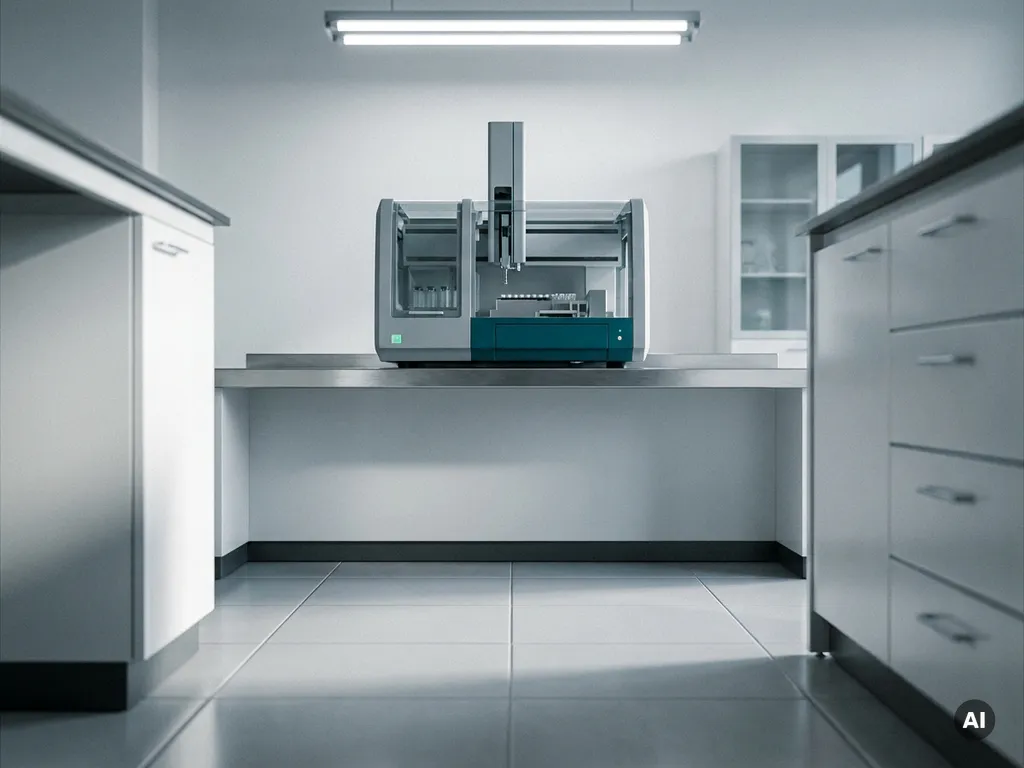
Most automated sample preparation systems require between 60 cm and 150 cm of bench width, with a depth of 60 to 80 cm, depending on the platform and its configuration. Compact benchtop units sit comfortably on a standard lab bench, while high-throughput multi-module systems may need a dedicated workstation or wall-mounted shelving above the bench. The exact footprint depends on the type of system, the number of modules involved, and whether peripheral equipment such as evaporators or extraction units are integrated into the same workflow.
For laboratories evaluating automated sample preparation, understanding space requirements early prevents costly redesigns during or after installation. The sections below address the most common space-related questions labs face when planning an upgrade to automated workflows.
How much bench space does an automated sample prep system typically require?
A standalone automated sample prep system typically occupies between 60 cm and 120 cm of bench width and 60 to 80 cm of depth. Compact single-module platforms designed for low to medium throughput fit within 60 to 80 cm of bench width, while larger, high-capacity systems with integrated racks, fraction collectors, or multi-channel configurations may extend to 120 cm or beyond.
The SPE2000, for example, is a high-throughput automated SPE system capable of processing up to 80 samples per run across 10 consecutive sequences. A platform of this capacity requires a dedicated bench segment rather than a shared surface. Similarly, the AutoEmpore, available in 3-, 6-, 9-, or 12-channel configurations, has a footprint that scales with the number of channels selected. Choosing a 3-channel configuration for a smaller lab versus a 12-channel version for high-volume water analysis will meaningfully affect how much space you need to allocate.
Evaporation and concentration equipment adds to the total surface area required. Systems such as the MultiVap 12 are specifically designed with a compact footprint in mind and can replace bulkier rotary evaporators, while the CentriVap benchtop concentration system is sized to sit alongside sample prep equipment without dominating the workspace.
What lab infrastructure does automated sample prep equipment need?
Automated sample preparation equipment typically requires a stable power supply, adequate ventilation or fume extraction, access to solvent waste disposal, and, in some cases, compressed gas or vacuum connections. The specific infrastructure requirements vary by system type, but most platforms share a common set of installation prerequisites.
Key infrastructure considerations include:
- Electrical supply: Most benchtop systems operate on standard 220-240 V (European) or 110 V (North American) single-phase power. High-throughput systems with heating or vacuum components may draw more current and need a dedicated circuit.
- Ventilation: Systems that handle organic solvents should be positioned near a fume hood or connected to a local exhaust ventilation system. Some modern evaporation systems, such as the MultiVap 12 with its integrated vapor evacuation system, are designed to operate safely outside a fume hood, reducing infrastructure demands.
- Solvent waste management: Automated systems generate solvent waste streams that must be routed to appropriate waste containers. Adequate space and plumbing for waste lines should be planned before installation.
- Vacuum or gas supply: SPE-based systems often require a vacuum source, and nitrogen blowdown evaporators need a regulated nitrogen supply. Confirm whether the system includes an internal pump or requires an external connection.
- Bench stability: Vibration-sensitive steps such as evaporation or precise fraction collection benefit from a solid, vibration-free bench surface.
Laboratories working with PFAS or persistent organic pollutants should also consider material compatibility. LabTech’s automated SPE systems, for instance, feature fully inert flow paths free of Teflon, which is particularly relevant for PFAS analysis where background contamination from fluoropolymer components is a concern. This material choice does not change the physical footprint but does affect which infrastructure connections and materials are appropriate.
How does footprint compare between automated and manual sample preparation?
Automated sample preparation systems generally occupy a similar or only slightly larger footprint than the equipment used in manual workflows, but they consolidate multiple steps into a single platform. Manual sample prep often spreads across several workstations, involving separate extraction, cleanup, and concentration stations, each with its own bench space, fume hood time, and personnel presence.
When you account for the total bench area consumed by manual workflows, including space for glassware, solvent bottles, column racks, rotary evaporators, and analyst workspace, automated systems frequently require less total floor space. A single automated SPE platform can replace a manual extraction setup, a column conditioning station, and a fraction collection area that together might occupy two or three meters of bench length.
Beyond raw footprint, automation changes how space is used. Manual workflows require analysts to be present at the bench for extended periods, which means ergonomic workspace design and sufficient aisle clearance become primary concerns. Automated systems run unattended, freeing analysts for other tasks and reducing the need for dedicated operator space adjacent to the equipment. In practice, this often means a smaller active workspace per sample processed, even if the instrument itself is not dramatically smaller than the manual equivalent.
Can automated sample prep systems fit in small or shared laboratories?
Yes, many automated sample preparation systems are specifically designed for compact or shared laboratory environments. Benchtop platforms with modular configurations allow labs to start with a smaller footprint and expand as throughput demands grow, making them practical even where bench space is limited.
Several design features help automated systems fit into constrained spaces:
- Modular architecture: Systems like the AutoEmpore are available in multiple channel configurations, so a smaller lab can select a 3-channel unit rather than a 12-channel system, significantly reducing bench width requirements.
- Compact evaporation solutions: The MultiVap 12’s compact design is positioned as a space-saving alternative to conventional rotary evaporators, making it well suited for labs where bench real estate is at a premium.
- Unattended operation: Because automated systems run without constant supervision, they can be placed in less accessible corners of a lab or on secondary benches, freeing primary workstations for manual tasks that require direct analyst access.
- Vertical use of space: Many systems support wall-mounted shelving for solvent reservoirs and waste containers, shifting some of the required storage area from horizontal bench surface to vertical wall space.
Shared laboratories face the additional challenge of scheduling instrument time across multiple users or analytical methods. Automated platforms that support consecutive sequences, such as the SPE2000’s ability to run 10 sequences of 8 samples, allow multiple users to queue samples efficiently, maximizing instrument utilization without requiring each user to be present throughout the run.
What space planning steps should labs take before installing a new system?
Before installing an automated sample preparation system, laboratories should complete a structured space audit that maps current bench usage, identifies infrastructure access points, and models the workflow integration of the new equipment. Starting this process early prevents installation delays and ensures the system performs as expected from day one.
Recommended planning steps include:
- Measure available bench space accurately, including depth, height clearance above the bench, and proximity to power outlets, gas connections, and ventilation points.
- Map the full workflow, identifying which steps the new system will automate and which adjacent steps (extraction, evaporation, injection) will remain manual or be handled by connected equipment.
- Account for consumable storage, including SPE cartridges, solvents, sample racks, and waste containers, all of which need accessible space near the instrument.
- Confirm infrastructure compatibility, checking power requirements, vacuum or nitrogen supply capacity, and solvent waste routing before the system arrives.
- Plan for maintenance access, ensuring there is sufficient clearance around the system for routine servicing and cartridge or rack replacement during runs.
- Consult the supplier during pre-installation, as many providers offer configuration guidance, pre-installation programming, and application testing that can identify space-related issues before they become problems on-site.
How do PFAS and dioxin/PCB systems differ in their space requirements?
PFAS analysis systems and dioxin/PCB cleanup platforms differ in footprint primarily because of the complexity and number of cleanup columns involved. Dioxin and PCB purification requires multi-column sequential cleanup, which drives the use of larger, more complex automated platforms. PFAS systems, by contrast, tend to focus on SPE-based extraction and are often more compact, though high-throughput PFAS workflows can still require substantial bench space.
Dioxin and PCB system footprint
Fully automated cleanup systems for dioxins, PCBs, PBDEs, and related persistent organic pollutants, such as the GO-EHT platform from Miura Institute of Environmental Science, are designed to handle multi-step purification sequences that would otherwise require extensive manual column work. These systems process samples through multiple adsorbent layers in sequence, which means the instrument itself has a larger physical footprint than a simple SPE extractor. Laboratories running dioxin analysis should allocate a dedicated bench section, typically 100 to 150 cm in width, along with space for solvent reservoirs and waste management. Because the GO-EHT system uses less than 100 mL of solvent per sample and eliminates direct sample contact with the instrument, the infrastructure for solvent storage and waste is less demanding than older manual methods despite the system’s size.
PFAS system footprint
Automated SPE systems for PFAS analysis, such as the SPE2000 and AutoEmpore, are generally more compact on a per-module basis, but high-throughput configurations with multiple channels or large sample volumes can still require 80 to 120 cm of bench width. A key infrastructure consideration for PFAS labs is material compatibility: the flow path must be free of fluoropolymer components to prevent background contamination, which influences the choice of system and may affect how ancillary tubing and connections are routed. Labs analyzing both PFAS and other contaminants should plan instrument zones carefully to avoid cross-contamination risks between different analytical workflows.
How DSP-Systems helps laboratories plan and install automated sample prep equipment
DSP-Systems supports laboratories across Europe and North America in selecting, configuring, and installing automated sample preparation systems that fit both their analytical requirements and their physical space. Whether you are setting up a new dioxin/PCB laboratory or scaling up PFAS throughput in an existing facility, DSP-Systems provides practical guidance at every stage.
- Pre-installation consultation to assess bench space, infrastructure, and workflow integration
- System configuration aligned with EPA and CEN analytical standards
- Application testing and programming before delivery to minimize on-site setup time
- A portfolio of compact, modular systems including the GO-EHT, SPE2000, AutoEmpore, and MultiVap evaporation platforms
- Turnkey laboratory setups and ongoing technical support for laboratories building or expanding internal capabilities
If you are planning an installation or evaluating which system fits your laboratory’s footprint and throughput requirements, contact DSP-Systems directly to discuss your specific situation and receive tailored recommendations.
Veelgestelde vragen
How much ceiling or overhead clearance is needed above an automated sample prep system?
Most benchtop automated sample preparation systems require at least 50 to 80 cm of vertical clearance above the instrument to allow for lid opening, rack loading, and routine maintenance access. If wall-mounted shelving is used for solvent reservoirs or waste containers, it should be positioned high enough not to interfere with these operations. Always check the manufacturer’s installation drawings for the specific system model, as high-throughput platforms with integrated fraction collectors or evaporation modules may have taller profiles than standard benchtop units.
Can I integrate an automated SPE system directly with an LC-MS instrument, and does that change the space requirements?
Yes, some automated SPE platforms can be configured for direct or near-direct coupling with LC-MS systems, which streamlines the analytical workflow but does increase the combined footprint. You will need to account for the bench space of both instruments side by side, plus adequate clearance for cabling, solvent lines, and waste routing between them. It is advisable to plan this integration during the initial space audit rather than retrofitting the connection after both systems are already installed, as improper positioning can create tubing tension or contamination risks.
What are the most common mistakes labs make when planning space for automated sample prep equipment?
The most frequent mistake is measuring only the instrument’s base footprint without accounting for consumable storage, waste containers, solvent reservoirs, and the clearance needed for loading and unloading samples during a run. Labs also commonly underestimate the infrastructure requirements — particularly vacuum lines, nitrogen supply, and dedicated electrical circuits — which can require unexpected bench reorganization after the system arrives. A thorough pre-installation audit that maps the full operational envelope of the system, not just its physical dimensions, prevents the majority of these issues.
How long does a typical installation and setup process take for an automated sample preparation system?
For most benchtop automated SPE systems, physical installation and basic commissioning can be completed within one to two days, provided the infrastructure — power, vacuum or gas supply, and ventilation — is already in place. Systems that include pre-installation application programming and testing by the supplier, such as those configured by DSP-Systems before delivery, typically require significantly less on-site setup time. More complex platforms, such as fully automated dioxin/PCB cleanup systems with multi-column configurations, may require additional time for calibration and method validation before routine use begins.
Is it possible to relocate an automated sample prep system after installation if the lab layout changes?
In most cases, yes — benchtop automated sample prep systems are not permanently fixed and can be relocated, provided the new position meets the same infrastructure requirements as the original installation point. The main considerations are re-routing solvent waste lines, confirming that power and gas connections are accessible at the new location, and re-leveling the bench surface if vibration sensitivity is a concern. It is worth consulting your supplier before moving the system, as some platforms require recalibration or software reconfiguration after relocation.
How do I determine whether my current bench can support the weight of an automated sample prep system?
Automated sample preparation systems vary considerably in weight depending on their size and configuration, ranging from approximately 20 kg for compact benchtop units to well over 80 kg for large high-throughput platforms with integrated modules. Standard laboratory benches are typically rated for 200 to 300 kg per linear meter, which is usually sufficient, but older or custom-built benches should be verified against the system’s published weight specifications before installation. If the system will be placed on a bench that also holds other heavy equipment, calculate the combined load and confirm the bench rating with your facilities team.
What should I ask a supplier during a pre-installation consultation to make sure space planning goes smoothly?
Key questions to ask include: What are the exact dimensions and weight of the system in its operational configuration, including any open lids or extended arms? What infrastructure connections are required, and where are they located on the instrument? Does the system include internal pumps and waste management, or do those need to be planned externally? Are there any material compatibility requirements that affect how ancillary tubing and connections should be routed? Finally, ask whether the supplier offers pre-installation programming and on-site commissioning support, as this significantly reduces the risk of discovering space or infrastructure issues only after delivery.
Gerelateerde artikelen
- How does automated sample preparation support multi-residue pesticide analysis?
- Can automated sample preparation systems handle low-volume clinical samples?
- How do you future-proof a laboratory automation investment?
- How do you troubleshoot errors in automated sample preparation?
- How does automated sample prep reduce human error in labs?
Deze inhoud is gegenereerd met behulp van AI en kan fouten bevatten.