
What sample throughput can automated preparation systems realistically achieve?
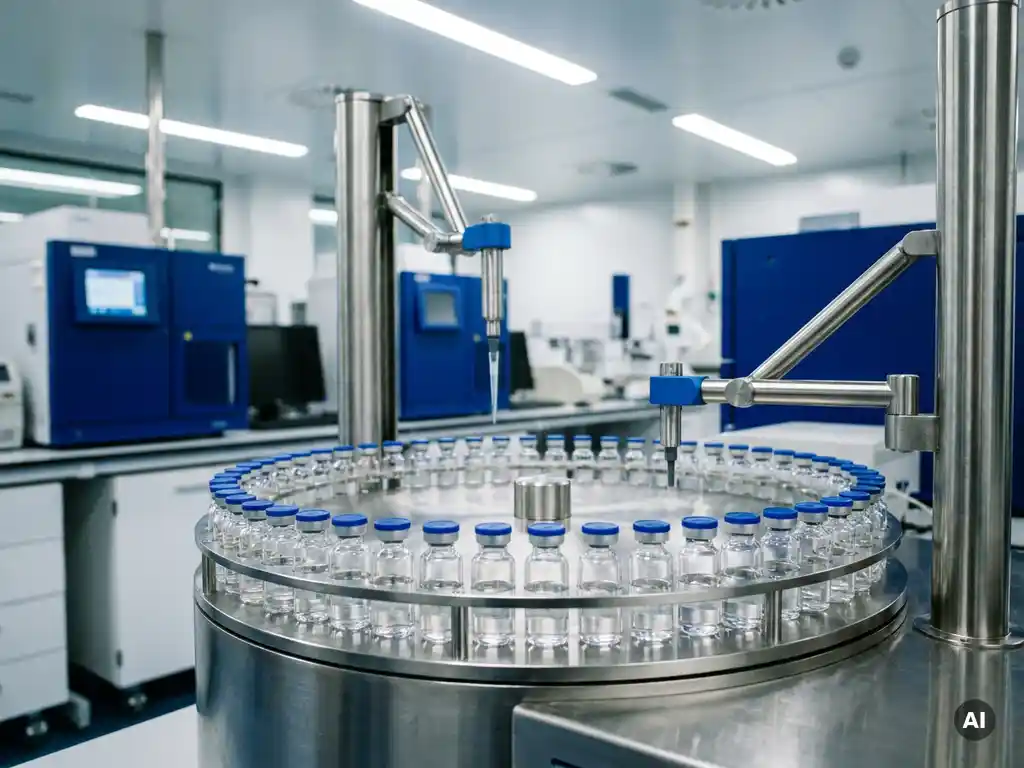
Modern automated sample preparation systems can realistically process between 20 and 80 samples per day, depending on the system, the analyte group, and the sample matrix. High-capacity platforms designed for SPE automation can handle up to 80 samples in a single unattended run, while fully automated cleanup systems for complex matrices like dioxins and PCBs typically deliver 6 to 20 samples per 24-hour cycle. The key variable is not the machine alone but how well the entire workflow is configured around it. The sections below break down the specific factors that shape real-world throughput and help laboratories set accurate expectations.
How many samples can automated preparation systems process per day?
Automated sample preparation systems can process anywhere from 6 to 80 samples per day in routine laboratory operation. The range is wide because throughput depends heavily on the type of system, the target analytes, and the complexity of the matrix. SPE automation platforms designed for PFAS, pesticides, and hormones sit at the higher end, while fully automated purification systems for persistent organic pollutants such as dioxins and PCBs operate at a more measured pace dictated by the chemistry involved.
As a concrete example, the SPE2000 automated extraction system processes up to 80 samples in a single run across 10 consecutive sequences of 8 samples simultaneously. This level of capacity is achievable for analytes like PFAS, pesticides, SVOCs, and PAHs where extraction steps are relatively fast. For solid and semi-solid matrices requiring Soxhlet-based extraction, the SER-158 extractor processes up to six samples in 23 hours, reflecting the longer contact time that thorough extraction demands. Fully automated dioxin and PCB purification using the GO-EHT platform can sustain high daily output when paired with an efficient extraction step, particularly in laboratories running dual acquisition or staggered batch sequences.
The practical daily figure for most contract testing laboratories running a mixed workload sits between 20 and 40 samples per day per system, rising significantly when multiple automated units run in parallel or when the analyte list favors faster chemistry.
What factors limit throughput in automated sample preparation?
The main factors that limit automated sample preparation throughput are sample matrix complexity, extraction time, solvent evaporation requirements, and the number of cleanup steps required before injection. No automated system can compress the time that chemistry itself demands, so throughput ceilings are set by the slowest step in the sequence rather than by the instrument’s mechanical speed.
The most common limiting factors are:
- Matrix lipid load: Fatty matrices such as fish oil, animal feed, and dairy require longer or more intensive cleanup to remove co-extracted lipids before mass spectrometry measurement, adding time to each sample cycle.
- Extraction method: Soxhlet-based or Randall-principle extraction for solid samples inherently takes longer than liquid-phase SPE. Systems like the SER-158 use less than 100 mL of solvent per sample and concentrate samples during extraction, but the extraction window still spans several hours.
- Number of cleanup columns: Dioxin and PCB analysis typically requires multi-layer column cleanup including acid silica, basic silica, and activated carbon fractions. Each additional column adds time per sample.
- Solvent evaporation: After extraction and purification, samples must be concentrated to the precise end volume required for GC injection. Evaporation capacity, whether using vacuum centrifugation or parallel nitrogen-assisted evaporation, can become a bottleneck if not scaled alongside the extraction system.
- Instrument availability: A single automated system running sequential batches is limited by how quickly each batch completes. Scheduling extraction, cleanup, and evaporation steps to overlap rather than queue is essential for maximizing daily output.
Laboratories that audit each step individually often discover that the evaporation or concentration stage, rather than the extraction itself, is the hidden bottleneck. Addressing that stage with a high-capacity evaporation system can unlock significant gains without any change to the extraction platform.
How does automated throughput compare to manual sample preparation?
Automated sample preparation consistently delivers two to five times more samples per analyst per day compared to fully manual workflows, while simultaneously reducing variability between samples. The throughput advantage compounds over time because automated systems can run overnight or across weekends without supervision, effectively adding productive hours that manual workflows cannot access.
In manual dioxin or PCB preparation, a skilled analyst typically processes two to four samples per day when performing liquid-liquid extraction, multi-column cleanup, and concentration by hand. The same analyst overseeing an automated purification system can monitor significantly more samples simultaneously, redirecting attention to quality control, data review, and instrument maintenance rather than repetitive pipetting steps.
Beyond raw sample numbers, automation reduces the sources of human error that affect reproducibility. Column packing consistency, solvent volumes, flow rates, and timing are controlled precisely by the instrument rather than varying between operators or across a long shift. For accredited laboratories operating under ISO 17025, this reproducibility directly supports method validation data and inter-laboratory comparability. Published research from dioxin laboratory networks has demonstrated that automated purification systems can meet and maintain European regulatory criteria for PCDD/Fs and PCBs in food and feed matrices, which manual methods struggle to match at scale.
Does higher throughput affect data quality or method compliance?
Higher throughput achieved through automation does not reduce data quality when the system is properly validated. In fact, automated systems tend to improve data quality by eliminating operator-to-operator variability and enforcing consistent conditions across every sample in a batch. The critical requirement is that the automated method is validated against the regulatory standard before routine use.
Regulatory frameworks such as EU Commission Regulation 2017/644 for dioxins and PCBs in food and feed, EPA Method 1613B for PCDD/Fs, and EPA Method 1668A for PCBs specify performance criteria including recovery ranges, precision requirements, and detection limits. Automated systems designed for these analytes are built and validated to meet these criteria. Research presented at Dioxin conferences has confirmed that automated purification fulfills European analytical criteria for PCDD/F and PCB monitoring in feed and food, and that simultaneous analysis of dioxins, PCBs, and PBDEs with fully automated sample preparation achieves validated performance across multiple matrices.
The compliance risk arises not from automation itself but from inadequate method transfer. Laboratories that adapt a validated manual method to an automated platform without running a full equivalency study may encounter recovery or blank issues. A structured method development and validation process, ideally supported by the system supplier, ensures that speed gains do not come at the cost of regulatory standing.
Which sample matrices are hardest to process at high throughput?
The most challenging matrices for high-throughput automated sample preparation are lipid-rich food and biological samples, complex environmental solids such as sewage sludge and contaminated soil, and large-volume water samples with high suspended solids. These matrices demand more intensive extraction, more cleanup steps, or specialized filtration that extends processing time and limits how many samples can move through the system per day.
Lipid-rich food and feed matrices
Fish, fish oil, animal fat, dairy products, and compound feed contain high concentrations of co-extractable lipids that must be removed before dioxin or PCB analysis by mass spectrometry. Lipid removal typically involves gel permeation chromatography or acid silica treatment, both of which add time and require careful optimization. The SER-158 extraction system combined with the GO-EHT automated cleanup platform is specifically designed to handle these matrices, but throughput per system per day is lower than for leaner matrices such as grain or water.
Sewage sludge and contaminated soils
Solid environmental matrices often contain high organic matter loads, variable moisture content, and complex contaminant profiles. Extraction requires longer contact times and higher solvent volumes to achieve acceptable recoveries. These samples also tend to produce extracts that are darker and more difficult to clean up, requiring additional column volumes or sequential cleanup steps that reduce the number of samples a single automated system can handle in a given period.
Large-volume water samples
Water samples analyzed for PFAS, pesticides, or hormones often require extraction of volumes from 100 mL up to 1,000 mL. Systems like the AutoEmpore large-volume extractor are built specifically for this application, supporting 25 mm, 47 mm, and 90 mm disks as well as cartridges, with automatic online filtration and water removal. Even with dedicated hardware, large sample volumes take longer to pass through the SPE medium, and samples with high turbidity or suspended solids require pre-filtration that adds to total processing time.
When does it make sense to scale with multiple automated systems?
Scaling to multiple automated sample preparation systems makes sense when a single system is consistently running at or near full capacity, when turnaround time requirements cannot be met with one instrument, or when a laboratory handles multiple analyte groups that benefit from dedicated platforms. The decision is practical rather than aspirational: a second system should solve a documented bottleneck, not simply add idle capacity.
Indicators that a laboratory is ready to scale include:
- The current system runs overnight batches regularly and still cannot clear the sample queue within required turnaround windows.
- Different analyte groups such as dioxins and PFAS require incompatible column chemistries or solvent sequences that cannot share a single platform efficiently.
- Staff time is being consumed by sample queuing and prioritization rather than by analysis and reporting.
- Regulatory or client contracts require guaranteed turnaround times that a single-system workflow cannot reliably meet during peak periods.
- The laboratory is expanding into new matrices or new analyte groups that would overload the existing system if added to its current workload.
Running two systems in staggered sequences, where one batch is in extraction while another is in cleanup, can effectively double daily output without doubling analyst time. This staggered approach is well established in high-volume dioxin laboratories and has been documented in the peer-reviewed literature as a practical strategy for sustaining high sample throughput alongside dual-acquisition mass spectrometry workflows.
How DSP-Systems helps laboratories maximize automated sample preparation throughput
DSP-Systems supplies and configures automated sample preparation systems specifically built for laboratories analyzing dioxins, PCBs, PFAS, pesticides, and other persistent organic pollutants. Their product portfolio addresses every stage of the sample preparation workflow, and their team supports laboratories in configuring systems for maximum throughput without compromising method compliance.
- GO-EHT automated purification systems for dioxins, PCBs, PBDEs, and PCNs across food, feed, soil, sludge, water, and air matrices, using less than 100 mL of solvent per sample and eliminating cross-contamination risk.
- SPE2000 automated SPE platform for up to 80 samples per run, covering PFAS, pesticides, hormones, SVOCs, and PAHs across a wide range of cartridge sizes and sample volumes.
- AutoEmpore large-volume water extraction system available in 3, 6, 9, or 12-channel configurations for high-throughput water sample processing.
- SER-158 solvent extractor for solid and semi-solid matrices, fully compatible with GO-EHT cleanup systems for an integrated end-to-end workflow.
- Method development and validation support to ensure automated workflows meet EPA, CEN, and EU regulatory requirements before routine use.
- Turnkey laboratory setup and training for laboratories building or scaling internal capacity in contaminant analysis.
If your laboratory is evaluating automated sample preparation systems or looking to increase daily sample throughput while maintaining regulatory compliance, contact the DSP-Systems team to discuss your specific workflow and find the right configuration for your needs.
Veelgestelde vragen
How long does it take to validate an automated sample preparation method before we can use it in routine analysis?
Method validation timelines vary depending on the regulatory framework and the number of matrices involved, but most laboratories should budget four to twelve weeks for a full equivalency study when transferring a validated manual method to an automated platform. The process typically includes recovery testing across representative matrices, precision and reproducibility runs, blank and carry-over assessments, and a comparison against existing performance criteria. Working with the system supplier during this phase significantly reduces the timeline, as suppliers like DSP-Systems provide application-specific protocols and reference data that give the validation process a head start rather than building from scratch.
Can a single automated system handle multiple analyte groups, or do we need separate platforms for dioxins, PFAS, and pesticides?
Whether one system can serve multiple analyte groups depends on whether those groups share compatible column chemistries, solvent sequences, and cleanup requirements. PFAS, pesticides, hormones, SVOCs, and PAHs are generally well-suited to a shared SPE automation platform like the SPE2000, while dioxins and PCBs require dedicated multi-layer column cleanup chemistry that is best handled on a purpose-built purification system like the GO-EHT. Running incompatible analyte groups through the same system typically creates scheduling conflicts and cross-contamination risk, so laboratories with high volumes across both categories benefit from dedicated platforms for each workflow.
What happens to throughput if our sample load suddenly spikes — can automated systems handle variable batch sizes efficiently?
Most modern automated sample preparation systems are designed to handle variable batch sizes without significant efficiency loss, since they process samples in discrete sequences rather than requiring a full load to operate. The SPE2000, for example, runs batches of 8 samples per sequence and can execute up to 10 consecutive sequences, meaning the system can be loaded incrementally as samples arrive rather than waiting for a full run to accumulate. The more important consideration during volume spikes is whether downstream steps — particularly solvent evaporation and GC/MS instrument availability — are scaled to absorb the increased output without creating a new bottleneck elsewhere in the workflow.
How much solvent and consumable cost reduction can we realistically expect when switching from manual to automated preparation?
Automated systems typically reduce solvent consumption by 30 to 60 percent compared to manual methods, primarily because programmed flow rates, precise volume delivery, and solvent recovery features eliminate the over-use that is common in manual workflows. The SER-158, for instance, uses less than 100 mL of solvent per sample for solid matrix extraction, which is substantially lower than conventional Soxhlet setups that can consume 150 to 300 mL per sample. Consumable savings on SPE cartridges and column materials are more variable but tend to follow a similar pattern, since automated systems apply consistent conditioning and loading volumes that extend usable cartridge life and reduce failed runs that require re-extraction.
What maintenance routine do automated sample preparation systems require, and how does downtime affect throughput planning?
Routine maintenance for automated sample preparation systems typically includes daily checks of tubing connections and valve seals, weekly cleaning of flow paths and manifold components, and periodic calibration of pumps and sensors according to the manufacturer’s schedule. Most systems are designed so that scheduled maintenance can be performed between batches rather than requiring full instrument downtime, minimizing the impact on daily throughput. Unplanned downtime is best managed by keeping critical consumables such as tubing, seals, and column frits in stock and by establishing a service agreement with the supplier, which ensures access to technical support and replacement parts without extended delays.
Is automated sample preparation suitable for laboratories that process only a small number of samples per week?
Automation can still deliver value at lower sample volumes, but the return on investment calculation shifts from throughput gains toward reproducibility, compliance, and analyst time savings. A laboratory processing 20 to 40 samples per week may find that automation eliminates the variability that comes from relying on one or two analysts for manual cleanup, which is particularly important for accredited laboratories where method performance must remain consistent regardless of staffing. The practical threshold for automation to make financial sense depends on the analyte group, the regulatory requirements, and the cost of analyst time — laboratories analyzing dioxins or PCBs in complex matrices often find that automation is justified even at relatively low weekly volumes because the manual alternative is so technically demanding.
What should we ask a system supplier before committing to an automated sample preparation platform?
The most important questions to ask before purchasing are whether the system has been validated for your specific analyte-matrix combinations, what regulatory methods it supports, and whether the supplier provides application data or can reference peer-reviewed publications demonstrating performance in your target matrices. You should also ask about the full workflow integration — specifically whether the system connects efficiently with your existing extraction and evaporation equipment or whether additional instruments are needed to avoid creating new bottlenecks. Finally, ask about the scope of after-sale support, including method development assistance, on-site training, and the availability of local service engineers, since the long-term throughput of any automated system depends as much on operational support as on the instrument itself.
Gerelateerde artikelen
- How does automated sample preparation reduce analyst-to-analyst variability?
- How does laboratory automation support green chemistry initiatives?
- How do forensic labs benefit from automated sample preparation workflows?
- How do you validate an automated sample preparation method?
- How does automated sample preparation work?
Deze inhoud is gegenereerd met behulp van AI en kan fouten bevatten.