

What are the data integrity benefits of automated sample preparation?
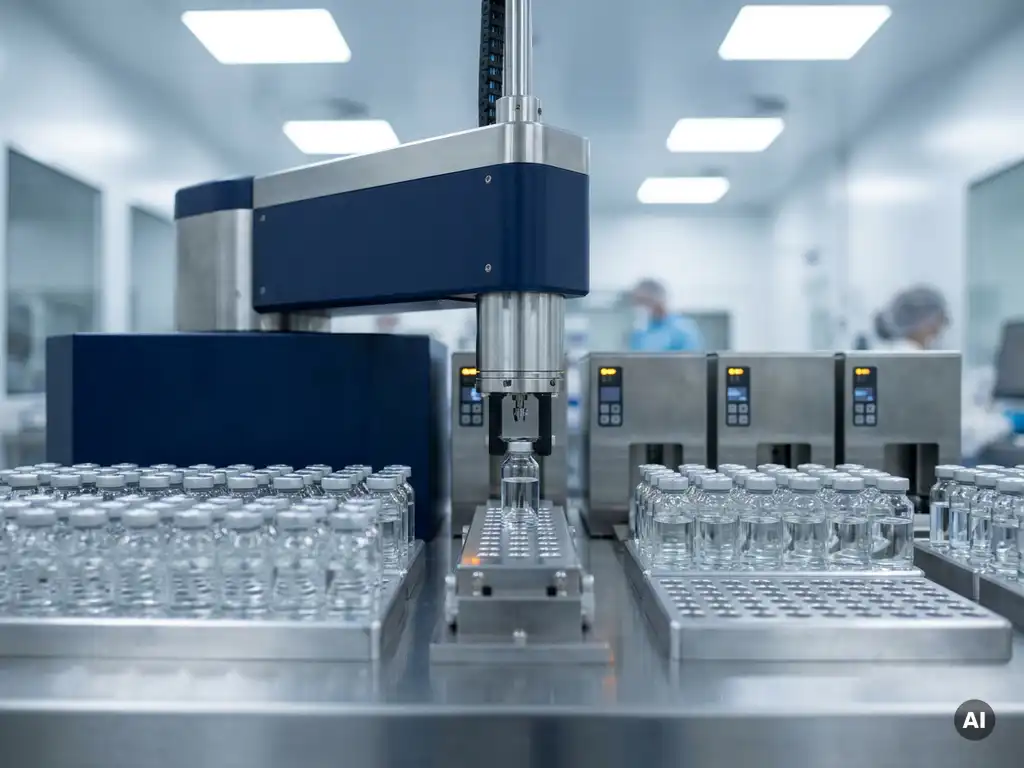
Automated sample preparation significantly improves data integrity by removing the most common source of analytical error: human variability. When robotic systems execute extraction, purification, and concentration steps according to fixed, validated protocols, every sample is treated identically, and every action is recorded. The result is more reproducible data, stronger audit trails, and greater confidence in analytical results across the entire workflow.
For laboratories analyzing persistent organic pollutants, PFAS, pesticides, and other regulated contaminants, data integrity is not just a quality goal but a regulatory requirement. The sections below address the most common questions laboratories ask when evaluating automated sample preparation for data integrity purposes.
How does automation reduce human error in sample preparation?
Automation reduces human error in sample preparation by replacing manually executed steps with programmed, robotically controlled actions that are performed identically every time. Variables such as pipetting speed, solvent volume, conditioning time, and flow rate are locked into validated methods, removing the inconsistency that comes from operator fatigue, distraction, or differing technique between analysts.
In manual sample preparation, error can enter the workflow at dozens of decision points: the wrong solvent volume, a missed conditioning step, inconsistent elution timing, or simple mislabeling. Each of these mistakes can compromise the final analytical result without leaving any visible trace in the data. Automated systems eliminate this ambiguity by executing each step deterministically.
The practical impact is measurable in several ways:
- Consistent solvent volumes delivered to each cartridge or column, regardless of who operates the system or what time of day it runs
- Standardized timing for equilibration, loading, washing, and elution steps that cannot be accidentally shortened or extended
- Reduced transcription errors because sample identifiers are logged automatically rather than written by hand
- Elimination of cross-contamination in systems where samples never come into direct contact with instrument surfaces, as is the case with closed-pathway purification platforms
The reduction in human error also has a secondary benefit: it makes method validation more straightforward. When analysts can demonstrate that every run follows an identical procedure, validation data is more credible and easier to defend during regulatory inspections or accreditation audits.
What is an audit trail in automated sample preparation systems?
An audit trail in automated sample preparation is a time-stamped, tamper-evident log that records every system action, parameter setting, user interaction, and deviation during a sample preparation run. It provides a complete, chronological account of what happened to each sample from the moment it entered the workflow to the point where it was handed off for instrumental analysis.
A robust audit trail typically captures:
- Operator login credentials and session timestamps
- Method name, version, and any modifications made before or during the run
- Actual instrument parameters such as flow rates, volumes, temperatures, and pressures, compared against the programmed setpoints
- Any system alerts, alarms, or out-of-specification events, along with the operator response
- Sample identifiers linked to each position in the sequence
- Start and end times for each preparation step
The audit trail serves two purposes simultaneously. First, it supports internal quality assurance by giving laboratory managers the information they need to investigate an anomalous result or a failed proficiency test. Second, it satisfies external requirements from regulatory bodies and accreditation schemes such as ISO 17025, which expect laboratories to demonstrate that their data is traceable and that their processes are under control.
In practice, the value of an audit trail depends on whether it is truly tamper-evident. Entries must be locked once written, and any corrections must be appended as new entries rather than overwriting the original record. Systems that meet 21 CFR Part 11 principles or equivalent standards for electronic records provide this level of protection.
How does automated sample preparation support chain of custody?
Automated sample preparation supports chain of custody by creating a continuous, documented record that links each physical sample to every action performed on it throughout the preparation workflow. Because the system logs sample identifiers, operator credentials, method parameters, and timestamps automatically, the chain of custody is built into the process rather than dependent on manual paperwork.
In a traditional manual workflow, chain of custody relies on handwritten logs, bench records, and the discipline of individual analysts. These records are vulnerable to gaps, transcription errors, and inconsistencies that can become serious problems during litigation, regulatory review, or accreditation assessment. Automation closes those gaps by capturing the custody record in real time.
Key ways automated systems strengthen chain of custody include:
- Barcode or RFID-based sample tracking that ties physical sample identity to digital records from receipt through preparation
- Automatic linking of preparation data to instrumental results when the system integrates with a laboratory information management system (LIMS)
- Immutable run logs that show exactly which analyst ran which samples, on which instrument, and under which method version
- Flagging of sequence deviations so that any interruption to the custody record is documented rather than silently ignored
For environmental and food safety laboratories that must report results to regulatory authorities, a well-documented chain of custody is often the difference between a defensible result and one that can be challenged. Automated systems make that documentation systematic rather than aspirational.
What data integrity risks remain even with automated systems?
Even with automated sample preparation, data integrity risks remain at the boundaries of the automated workflow: sample receipt, instrument handoff, data transfer, and result interpretation. Automation controls what happens inside the system, but it cannot eliminate risks that originate before or after the automated steps.
The most significant residual risks include:
- Incorrect sample labeling before automation begins: if a sample is mislabeled at receipt, the automated system will prepare it flawlessly under the wrong identity
- Method selection errors: an operator who selects the wrong validated method for a sample type will receive a correctly executed result for the wrong procedure
- Data transfer failures between systems: results exported from the preparation system to a LIMS or data system can be corrupted, truncated, or misassigned if the interface is not properly validated
- Instrument calibration and maintenance gaps: automated preparation cannot compensate for a poorly calibrated detector or a degraded analytical column
- Inadequate review of flagged events: automated systems generate alerts when parameters drift out of specification, but those alerts only protect data integrity if analysts are trained to act on them appropriately
There is also a subtler risk: over-reliance on automation can reduce analyst engagement with the data. When results appear automatically, there is a temptation to accept them without the critical review that would catch a systematic error. Automation improves the reliability of individual steps, but it does not replace scientific judgment at the interpretation stage.
How does automated SPE compare to manual extraction for data integrity?
Automated solid phase extraction delivers substantially better data integrity than manual extraction because it eliminates operator-to-operator variability, enforces consistent method parameters, and generates a complete electronic record of every run. Manual SPE, even when performed by skilled analysts, introduces variability that is difficult to quantify and impossible to fully document.
Reproducibility and consistency
In manual SPE, the analyst controls flow rates by hand, judges conditioning and elution endpoints visually, and measures solvent volumes with equipment that introduces its own uncertainty. These judgments differ between analysts and even between runs by the same analyst. Automated SPE systems apply precisely programmed flow rates, volumes, and timing to every cartridge in every sequence, producing recovery data that is far more consistent across runs, analysts, and days.
For laboratories running large batches of samples for contaminants such as PFAS, pesticides, or persistent organic pollutants, this consistency translates directly into tighter method performance data, lower uncertainty estimates, and more defensible results during accreditation reviews.
Documentation and traceability
Manual SPE relies on bench records and analyst notes to document what occurred during extraction. These records are retrospective, incomplete by nature, and dependent on the analyst remembering to record deviations. Automated SPE systems generate prospective, real-time records that capture actual instrument behavior rather than analyst recollection. When a deviation occurs, such as a pressure alarm or a missed priming step, the system logs it immediately and links it to the affected sample.
This difference in documentation quality becomes critical during out-of-specification investigations. With manual records, it is often impossible to determine whether a poor result reflects a sample problem or a preparation error. With automated records, the preparation history is available in full, making root cause analysis far more tractable.
Which laboratories benefit most from automated sample preparation for data integrity?
Laboratories that benefit most from automated sample preparation for data integrity are those operating under formal quality management systems, handling large sample volumes, or reporting results to regulatory authorities. The more stringent the data integrity requirement, the greater the return from automation.
The laboratories where the impact is most pronounced include:
- ISO 17025-accredited testing laboratories that must demonstrate method traceability, analyst independence, and result reproducibility to maintain their accreditation status
- Environmental contract laboratories processing high volumes of samples for dioxins, PCBs, PFAS, or pesticides, where consistent throughput and reliable documentation are both commercial and regulatory necessities
- Food safety and agri-food testing laboratories that must meet EU maximum residue limits and demonstrate compliance through auditable analytical records
- Government monitoring programs where results feed into public health decisions and must withstand legal and scientific scrutiny
- Laboratories undergoing proficiency testing or participating in interlaboratory comparison programs, where reproducibility and low uncertainty are directly evaluated
Smaller or lower-throughput laboratories can also benefit, particularly when they are building capabilities in contaminant analysis for the first time. Starting with an automated platform means building data integrity into the workflow from the outset, rather than retrofitting controls onto an established manual process.
How DSP-Systems supports data integrity in automated sample preparation
DSP-Systems provides automated sample preparation platforms specifically designed for laboratories where data integrity, traceability, and regulatory compliance are non-negotiable. Their portfolio addresses the full preparation workflow, with systems that enforce consistent protocols, minimize contamination risk, and generate complete run documentation.
- The GO-EHT purification platform eliminates cross-contamination by preventing direct sample contact with the system, while reducing solvent consumption to under 100 mL per sample without dichloromethane
- The SPE2000 processes up to 80 samples per run across consecutive sequences, delivering reproducible automated SPE for PFAS, pesticides, PAHs, and other contaminants
- The AutoEmpore supports large-volume water extraction with automatic online filtration, reducing manual intervention and the documentation gaps it creates
- All systems are configured in line with EPA and CEN standards, supporting accreditation requirements from the outset
- DSP-Systems provides method development, validation support, and training to ensure that automated workflows are implemented correctly and that analysts understand how to interpret system records
If your laboratory is evaluating automated sample preparation to strengthen data integrity, reduce human error, or meet accreditation requirements, contact DSP-Systems to discuss which platform fits your analytical scope and sample throughput.
Veelgestelde vragen
How do we validate an automated sample preparation method before putting it into routine use?
Method validation for automated sample preparation follows the same core principles as manual validation — recovery, repeatability, reproducibility, linearity, and matrix effects — but the process is more straightforward because instrument parameters are fixed and every run is documented identically. Start by running a minimum set of spiked reference materials across multiple days and operators to establish baseline performance data, then compare those results against your regulatory or accreditation requirements (e.g., ISO 17025 or EPA method criteria). Because the automated system locks in all variables, validation data generated on one occasion is genuinely representative of future runs, which makes the documentation package much easier to defend during audits.
What should we do when the automated system flags an out-of-specification event during a run?
When a system alert is triggered — such as a pressure alarm, a flow rate deviation, or a missed priming step — the first step is to stop and assess whether the affected samples can still be considered valid, rather than simply acknowledging the alert and continuing. Review the audit trail entry for the flagged event, determine which samples in the sequence were impacted, and apply your laboratory’s out-of-specification (OOS) procedure, which should include a documented decision on whether to re-prepare those samples. Never suppress or dismiss alerts without a written justification, as the alert log is part of the tamper-evident record and unaddressed flags will raise questions during regulatory inspections or accreditation audits.
Can automated sample preparation systems integrate with our existing LIMS, and what does that integration require?
Most modern automated sample preparation platforms support LIMS integration through standard data export formats (such as CSV, XML, or direct database connections), but the integration needs to be formally validated before it is used for regulated data. This means verifying that sample identifiers, preparation parameters, and result files transfer completely and accurately between systems, and documenting that validation with test records. Work with both your LIMS vendor and the instrument manufacturer to map the data fields correctly from the outset, since a poorly configured interface is one of the most common residual data integrity risks in otherwise well-automated laboratories.
How many operators need to be trained before we can run the system in routine use, and what does training typically cover?
At minimum, two to three trained operators are recommended for routine use to ensure continuity and to prevent a single point of failure in your workflow. Training typically covers system operation and method loading, interpretation of audit trail entries and system alerts, basic troubleshooting for common alarms, and the laboratory’s SOPs for documenting deviations and OOS events. Many instrument providers, including DSP-Systems, offer structured training programs that can be tailored to your specific methods and regulatory context, and completing that training should be documented as part of your quality management records.
What is the biggest mistake laboratories make when transitioning from manual to automated sample preparation?
The most common mistake is treating automation as a drop-in replacement for manual procedures without re-validating the method on the new platform. Automated systems apply parameters — flow rates, volumes, timing — with a precision that manual procedures cannot match, which means recovery profiles and matrix effects can shift even when the chemistry is nominally identical. Laboratories that skip or abbreviate revalidation often discover discrepancies only when proficiency test results or interlaboratory comparisons reveal a systematic bias. Always run a full bridging validation that compares automated and manual performance side by side before decommissioning your manual procedure.
How does automated sample preparation affect method uncertainty estimates, and does it help with accreditation?
Automation typically reduces measurement uncertainty by eliminating the largest contributor in manual workflows: operator-to-operator variability. When all preparation steps are executed identically across runs, the repeatability and intermediate precision components of your uncertainty budget become smaller and more defensible, which directly strengthens your accreditation submission. ISO 17025-accredited laboratories are required to estimate and report measurement uncertainty, and a tighter, well-documented uncertainty estimate — supported by automated run records — is a significant advantage during both initial accreditation and surveillance assessments.
Is automated sample preparation cost-effective for lower-throughput laboratories, or is it only justified for high-volume operations?
While the return on investment is most obvious in high-throughput settings, lower-throughput laboratories can still achieve meaningful cost savings through reduced solvent consumption, fewer failed runs requiring re-preparation, and lower risk of costly regulatory non-conformances. The more important consideration for smaller laboratories is often capability rather than volume: automated platforms allow a smaller team to consistently meet the documentation and reproducibility standards required for accreditation or regulatory reporting, which would otherwise demand disproportionate manual effort. Starting with automation also means data integrity controls are built into the workflow from day one, avoiding the much harder task of retrofitting compliance onto an established manual process.
Gerelateerde artikelen
- How do food safety labs use automated sample preparation systems?
- How does automated sample preparation support multi-residue pesticide analysis?
- What are the benefits of automated sample preparation?
- How does automated sample preparation support regulatory compliance?
- How do you troubleshoot errors in automated sample preparation?
Deze inhoud is gegenereerd met behulp van AI en kan fouten bevatten.