
How do you scale laboratory automation as sample volumes grow?
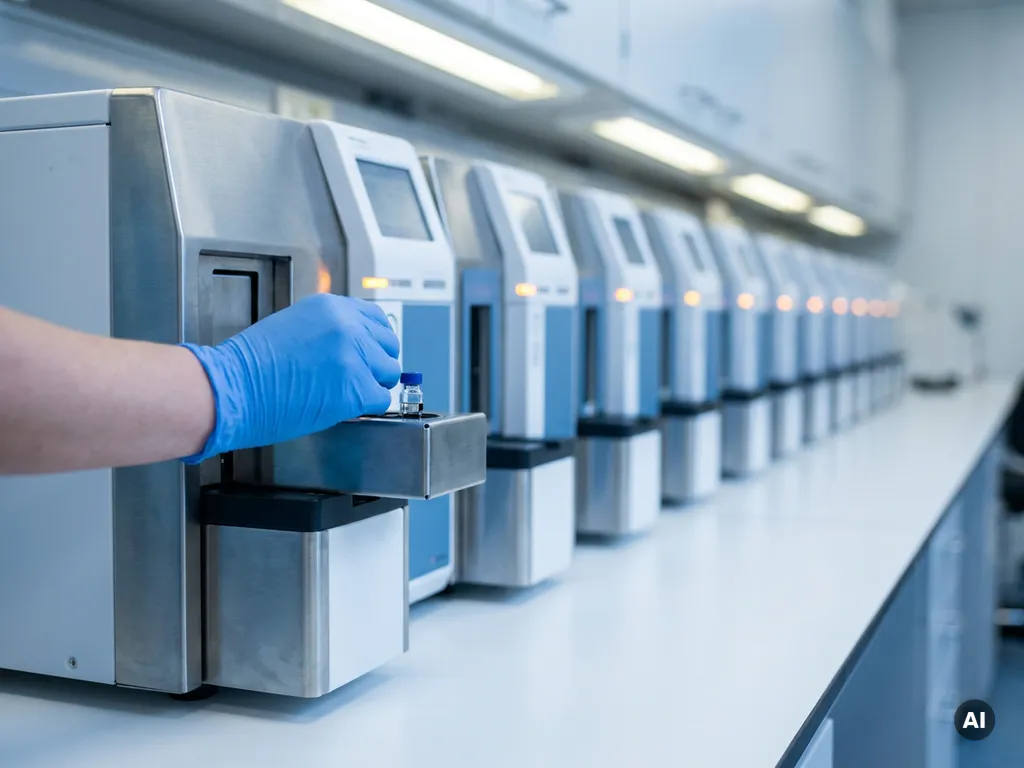
You scale laboratory automation as sample volumes grow by adding higher-capacity instruments, parallelizing workflows, and transitioning from semi-automated to fully automated platforms that handle extraction, purification, and concentration in integrated sequences. The key is matching each stage of sample preparation to throughput demands without compromising data quality or regulatory compliance. The questions below address the most common scaling challenges laboratories face in 2026.
What are the main bottlenecks when sample volumes increase in a lab?
The primary bottlenecks when sample volumes increase are manual sample handling, solvent evaporation, and sequential rather than parallel processing. These three stages consume the most analyst time and are the most prone to error under high-load conditions. Identifying which step limits overall throughput is the essential first move before investing in any new equipment.
In environmental contaminant laboratories, extraction and cleanup are the most time-intensive phases. When sample numbers double, a workflow that relies on manual Soxhlet extraction or gravity-fed column cleanup cannot simply run twice as fast. Analysts become the constraint, not the instruments. Solvent evaporation is another hidden bottleneck; concentrating dozens of extracts down to a precise injection volume can take hours when done one sample at a time using conventional rotary evaporators.
Cross-contamination risk also increases with volume. More samples moving through shared glassware or tubing raises the probability that a trace-level contaminant from one matrix carries over into the next. For laboratories analyzing PFAS, dioxins, or PCBs at parts-per-trillion levels, even minor carryover can invalidate results. Addressing these bottlenecks requires not just faster instruments but a fundamentally different approach to workflow design.
What types of laboratory automation can handle higher sample throughput?
The main categories of laboratory automation suited to high-throughput sample preparation are automated solid-phase extraction systems, fully automated purification platforms, parallel evaporation systems, and integrated extraction-to-concentration workflows. Each addresses a different stage of the analytical pipeline, and the right combination depends on the target analytes and sample matrices involved.
Automated extraction systems
Automated SPE systems process multiple samples simultaneously using programmable solvent delivery, eliminating the manual steps that slow down high-volume workflows. Systems designed for large-volume water samples can operate in parallel or series across multiple channels, making them well suited for PFAS analysis automation and pesticide monitoring programs where water matrices dominate the workload.
Automated purification platforms
For persistent organic pollutants such as dioxins, PCBs, and PBDEs, fully automated cleanup systems eliminate the need for manual column preparation and fraction collection. These platforms can run overnight or unattended, significantly increasing the number of samples processed per analyst per day. When samples do not come into direct contact with the system hardware, cross-contamination risk is structurally eliminated rather than just managed.
Parallel evaporation systems
Parallel evaporation replaces sequential concentration steps with simultaneous processing of large sample batches. Systems using nitrogen sweeping or vacuum centrifugation can handle dozens of vials in a single run, removing one of the most persistent throughput constraints in the post-extraction workflow.
How does automated solid-phase extraction scale with increasing sample loads?
Automated SPE scales with increasing sample loads through multi-channel configurations, flexible cartridge compatibility, and programmable sequences that process large batches without analyst intervention between runs. The scalability is built into the instrument design rather than requiring separate units for each sample group.
A well-designed SPE automation platform can process up to 80 samples in a single run across consecutive sequences of eight samples simultaneously. Compatibility with cartridge volumes ranging from 1 mL to 12 mL, and sample input volumes from 10 mL up to 1,000 mL, means the same system handles both small-volume biological extracts and large-volume environmental water samples. Switching between sample racks for different volume ranges is fast, so throughput is not sacrificed when the matrix mix changes between batches.
For large-volume water extractions specifically, disk-based systems with multiple channel options offer additional flexibility. Supporting 25 mm, 47 mm, and 90 mm disks alongside cartridges, and offering automatic online filtration and water removal, these platforms reduce the hands-on steps that otherwise scale linearly with sample count. The result is that doubling sample volume does not require doubling analyst time.
When should a lab move from semi-automated to fully automated sample prep?
A laboratory should move from semi-automated to fully automated sample preparation when manual steps are limiting throughput, analyst variability is affecting reproducibility, or regulatory compliance requirements demand tighter process control. The transition is justified when the cost of analyst time, solvent consumption, and repeat analyses exceeds the investment in full automation.
Practical indicators include consistent backlogs in the extraction or cleanup queue, high rates of sample reruns due to contamination or procedural inconsistency, and difficulty maintaining turnaround times during staff absences. Laboratories analyzing persistent organic pollutants under ISO 17025 accreditation face particular pressure, since method validation requires demonstrable reproducibility that is easier to document when the process is fully automated and logged.
The decision also has an environmental dimension. Semi-automated workflows typically consume more organic solvent per sample because manual steps make precise, minimal-volume delivery harder to achieve consistently. Fully automated systems designed for environmental contaminant analysis can reduce solvent consumption to below 100 mL per sample without using dichloromethane, which matters both for laboratory safety and for sustainability commitments that are increasingly part of procurement criteria in 2026.
What’s the difference between modular and fully integrated automation systems?
Modular automation systems consist of standalone instruments that each handle one stage of sample preparation and can be combined in different configurations, while fully integrated systems perform multiple stages — extraction, purification, and sometimes concentration — within a single connected workflow controlled by unified software. The choice between them affects flexibility, footprint, and the complexity of method transfer.
Modular systems offer the advantage of incremental investment. A laboratory can automate extraction first, then add automated cleanup later, without replacing existing equipment. This approach suits laboratories with diverse analytical portfolios where different sample types require different preparation routes. The trade-off is that transfers between modules often still require manual intervention, and coordinating instrument schedules across a modular setup adds operational complexity as volumes grow.
Fully integrated systems eliminate inter-instrument transfers entirely. An extraction system that feeds directly into an automated cleanup platform, for example, removes a manual step that would otherwise become a bottleneck at scale. The SER-158 solvent extractor, for instance, is designed for seamless compatibility with GO-EHT automated cleanup systems, creating a continuous preparation sequence for solid and semi-solid samples. This kind of integration is particularly valuable for laboratories running overnight or weekend batches where unattended operation must be reliable from start to finish.
How do you validate a scaled-up automated workflow for regulatory compliance?
Validating a scaled-up automated workflow for regulatory compliance requires demonstrating that the automated method meets the same performance criteria as the validated manual or semi-automated method, including accuracy, precision, recovery, linearity, and specificity across the full range of sample matrices and concentration levels covered by the accreditation scope.
The validation process typically begins with a comparison study running identical samples through both the existing method and the automated workflow in parallel. Recovery of spiked analytes, matrix-matched calibration performance, and repeatability across multiple operators and run days are the core parameters. For laboratories accredited under ISO 17025, the validation data must be documented in a format that satisfies the accreditation body and any relevant regulatory authority, such as EU food safety monitoring programs or US EPA methods.
Key considerations during validation of automated sample preparation include confirming that solvent volumes, contact times, and flow rates in the automated system replicate the conditions under which the original method was validated. Any deviation — even a beneficial one, such as reduced solvent use — must be justified with data showing that method performance is maintained or improved. Certified analytical reference standards and isotopically labeled internal standards are essential for this process, as they provide the quantitative anchors needed to demonstrate recovery and system suitability across every run.
Ongoing system suitability checks, automated run logs, and instrument qualification records all contribute to maintaining compliance after validation is complete. Regulators and accreditation bodies increasingly expect that automated workflows include audit trails that make it possible to reconstruct exactly what happened during any given analytical run.
How DSP-Systems helps laboratories scale automated sample preparation
DSP-Systems provides the instrumentation, expertise, and support that laboratories need to scale their automated sample preparation workflows as sample volumes grow. Their offering covers every stage of the analytical pipeline, from extraction through purification and concentration, with systems validated for PFAS, dioxins, PCBs, pesticides, and other environmental contaminants.
- High-capacity SPE automation: The SPE2000 processes up to 80 samples per run with flexible cartridge and volume compatibility, purpose-built for scaling SPE workflows without increasing analyst headcount.
- Fully automated purification: The GO-EHT systems from Miura eliminate cross-contamination risk and reduce solvent use to below 100 mL per sample, supporting unattended overnight processing for dioxin and PCB analysis.
- Integrated extraction solutions: The SER-158 connects directly with GO-EHT cleanup systems, creating a seamless automated workflow for solid and semi-solid matrices.
- Parallel evaporation: The MultiVap and CentriVap product lines remove the concentration bottleneck by processing large sample batches simultaneously.
- Method development and validation support: DSP-Systems assists laboratories in validating scaled workflows against EPA and CEN standards, including supply of certified analytical reference standards for all major contaminant classes.
- Turn-key lab setups and training: From initial configuration to analyst training, DSP-Systems supports the full transition to higher-throughput automated workflows.
If your laboratory is evaluating how to scale its sample preparation capacity in 2026, contact DSP-Systems to discuss which combination of systems fits your analyte scope, sample matrices, and throughput targets.
Veelgestelde vragen
How do I estimate the return on investment (ROI) when upgrading to fully automated sample preparation?
Start by calculating your current cost per sample, factoring in analyst labor hours, solvent consumption, repeat analysis rates, and instrument downtime. Then compare that against the projected cost per sample using the automated system, accounting for reduced reruns, lower solvent use, and the ability to process batches unattended overnight. Most laboratories find that the ROI becomes compelling once sample volumes exceed a consistent threshold where analyst time is the primary cost driver, typically when manual prep consumes more than 30–40% of total analyst hours per week.
Can automated sample preparation systems handle multiple sample matrices in the same batch run?
Yes, many modern automated SPE and purification platforms are designed to accommodate mixed-matrix batches, provided the method parameters for each matrix have been individually validated. Systems with flexible cartridge compatibility and programmable solvent sequences can switch between matrix-specific protocols within a single run. However, it is best practice to group similar matrices together where possible to minimize the risk of method parameter conflicts and to simplify the audit trail documentation required under ISO 17025 accreditation.
What should I do if my automated system shows lower analyte recovery compared to my manual method during validation?
First, systematically compare the key method parameters between both approaches: solvent volumes, flow rates, contact times, and conditioning steps. Even small deviations in flow rate through an SPE cartridge can significantly affect recovery for low-polarity analytes like PCBs or PBDEs. Use isotopically labeled internal standards to isolate whether the recovery gap is occurring during extraction, cleanup, or concentration. In most cases, recovery differences can be resolved by fine-tuning the automated method’s programmable parameters rather than redesigning the workflow from scratch.
How do I manage carryover risk when scaling up to high-throughput automated workflows?
Carryover management at scale relies on a combination of instrument design and procedural controls. Prioritize systems where samples do not come into direct contact with shared instrument hardware, as this structurally eliminates the primary carryover pathway rather than simply reducing it. Supplement this with regular blank injections between high-concentration samples, validated instrument flush sequences, and routine monitoring of system blanks as part of your ongoing quality control program. For ultra-trace analytes like PFAS or dioxins, carryover testing should be a formal part of your method validation documentation.
Is it possible to automate sample preparation for solid and semi-solid matrices, or is automation mainly suited to liquid samples?
Automation is well established for solid and semi-solid matrices, though the extraction stage typically requires a different approach than for liquid samples. Accelerated solvent extraction (ASE) and automated Soxhlet-style systems such as the SER-158 are specifically designed for soils, sediments, food matrices, and biological tissues. These systems can be integrated directly with downstream automated cleanup platforms, creating a continuous automated workflow from raw solid sample to purified extract ready for instrumental analysis.
How do staffing changes or analyst turnover affect a scaled automated workflow, and how can labs protect against this risk?
Fully automated workflows are inherently more resilient to analyst turnover than manual or semi-automated ones because the method logic is encoded in the instrument software rather than held as tacit operator knowledge. To further protect against disruption, ensure that all method parameters, instrument settings, and maintenance procedures are documented in a format that a newly onboarded analyst can follow independently. Cross-training at least two analysts on each system and maintaining detailed automated run logs also ensures that institutional knowledge is captured in the workflow itself, not just in individual staff members.
What routine maintenance practices are most critical for keeping high-throughput automated systems running reliably?
The highest-impact maintenance tasks are regular inspection and replacement of tubing, seals, and valves, since these components are under continuous solvent exposure and are the most common source of flow-rate drift or leaks in high-volume operation. Establish a preventive maintenance schedule based on the manufacturer’s recommendations and your actual run volume, rather than calendar time alone. Keeping a log of system suitability check results over time is also valuable, as gradual performance drift is much easier to catch and correct early when trending data is available.
Gerelateerde artikelen
- Can automated systems run unattended overnight in a laboratory?
- What is automated sample preparation used for?
- When should a lab switch to automated sample preparation?
- How do you integrate automated systems into an existing lab workflow?
- How does automation help labs meet regulatory compliance requirements?
Deze inhoud is gegenereerd met behulp van AI en kan fouten bevatten.