
What is automated sample preparation used for?
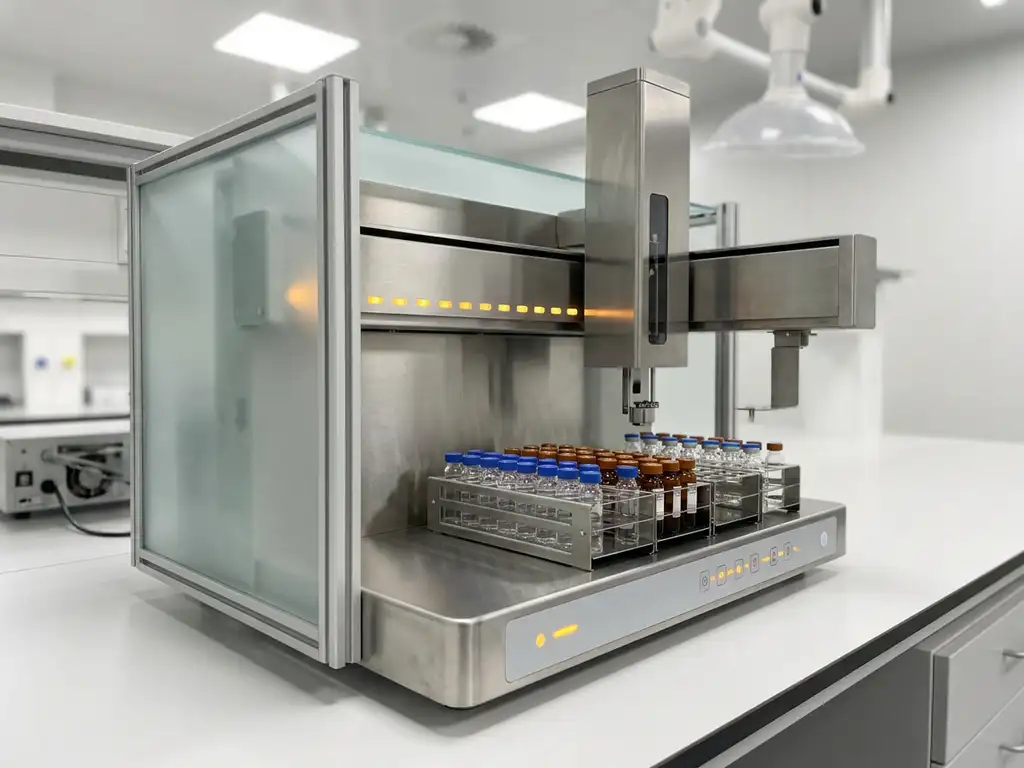
Automated sample preparation is used to extract, clean up, and concentrate samples so that target compounds can be accurately detected and measured by analytical instruments. It replaces time-consuming manual steps with programmable, reproducible workflows that reduce human error and dramatically increase laboratory throughput. The sections below answer the most common questions laboratories have before adopting these systems.
What types of samples can automated preparation systems handle?
Automated sample preparation systems can handle a wide range of sample matrices, including food, feed, soil, water, air, sewage sludge, and biological materials. Modern platforms are engineered to process both solid and liquid inputs, making them suitable for environmental monitoring programs, food safety testing, and industrial quality control alike.
Solid and semi-solid samples such as soil, sediment, and feed are typically processed through solvent-based extraction systems before being transferred to a cleanup or purification stage. The SER-158, for example, uses the Randall principle to extract up to six solid samples simultaneously in boiling solvent, completing the process in around 23 hours while using less than 100 mL of solvent per sample.
Liquid matrices present their own challenges, particularly when large volumes of water must be screened for trace-level contaminants. Systems such as the AutoEmpore are specifically designed for high-volume water sample extraction, supporting disk formats from 25 mm to 90 mm and cartridge sizes of 3 mL and 6 mL, with built-in online filtration and water removal. Whether the matrix is a drinking water sample or a complex food extract, automated sample preparation systems can be configured to match the physical and chemical properties of the material being analyzed.
Which contaminants require automated sample preparation?
Persistent organic pollutants (POPs) and emerging contaminants are the compound classes most commonly analyzed using automated sample preparation. These include dioxins (PCDD/Fs), polychlorinated biphenyls (PCBs), polybrominated diphenyl ethers (PBDEs), polychlorinated naphthalenes (PCNs), PFAS, pesticides, polycyclic aromatic hydrocarbons (PAHs), hormones, and semi-volatile organic compounds (SVOCs).
What makes these analytes particularly demanding is that they occur at extremely low concentrations in complex matrices that contain large amounts of co-extracted lipids, pigments, and other interfering substances. Manual cleanup of these interferences is labor-intensive and inconsistent. Automated purification platforms address this directly by running reproducible, solvent-optimized cleanup sequences that remove matrix interferences without the analyst needing to intervene at each step.
PFAS analysis adds an additional layer of complexity because many common laboratory materials contain fluoropolymers that can contaminate samples. Automated SPE systems designed with fully inert, Teflon-free flow paths are specifically built to prevent this background contamination from distorting results. Similarly, dioxin and PCB analysis requires multi-layer column cleanup that is difficult to perform consistently by hand, making automation not just convenient but essential for laboratories that need to meet regulatory reporting criteria under frameworks such as EPA 1613B or EU Commission Regulation standards.
How does automated sample preparation work in a laboratory?
Automated sample preparation works by moving a sample through a defined sequence of extraction, purification, and concentration steps under instrument control, replacing manual pipetting and column handling with programmable robotic or fluidic systems. The analyst loads samples and sets parameters; the system executes the method and delivers a cleaned, concentrated extract ready for injection into a GC-MS or LC-MS instrument.
The typical workflow follows three main stages:
- Extraction: Target compounds are transferred from the sample matrix into a solvent. Solid samples may be processed by Soxhlet-type extraction or pressurized solvent extraction, while liquid samples pass through solid phase extraction (SPE) cartridges or disks that retain the analytes of interest.
- Cleanup and purification: The raw extract still contains matrix interferences. Automated purification systems pass the extract through a series of selective sorbent columns that remove lipids, pigments, and other co-extractants while retaining the target analytes. GO-EHT systems, for instance, perform this step with less than 100 mL of solvent per sample and without the need for dichloromethane.
- Concentration: The purified extract is reduced to a precise final volume suitable for instrumental analysis. Vacuum centrifuges, nitrogen evaporation systems, and parallel evaporators are all used at this stage depending on the sample type and volume requirements.
Because samples do not come into direct contact with the instrument hardware in many modern systems, cross-contamination between runs is eliminated. This is a significant quality advantage over manual methods, where shared glassware and reagents are common contamination pathways.
What industries and sectors use automated sample preparation?
Automated sample preparation is used across any industry that requires trace-level chemical analysis of complex matrices. The primary sectors include environmental testing laboratories, food and feed safety testing, pharmaceutical quality control, occupational health and exposure assessment, and academic or government research institutions.
Environmental laboratories analyzing soil, water, and air for regulatory compliance represent one of the largest user groups. These labs must process high volumes of samples to tight turnaround times while meeting detection limits set by environmental agencies. Food safety testing laboratories are another major sector, particularly those screening for dioxins and PCBs in meat, fish, dairy, and eggs, or PFAS in drinking water and food packaging migration studies.
Industrial manufacturers also rely on sample preparation automation when testing raw materials, finished goods, or process streams for contaminants that could affect product quality or regulatory approval. Laboratories supporting pesticide residue monitoring in agricultural produce, PAH screening in smoked foods, or mycotoxin detection in cereals all benefit from the throughput and reproducibility that automation provides. In 2026, growing regulatory pressure around PFAS in food contact materials and drinking water is driving particularly strong demand for automated SPE workflows across multiple sectors simultaneously.
How does automation compare to manual sample preparation?
Automated sample preparation consistently outperforms manual methods in throughput, reproducibility, and analyst safety. Manual preparation is slow, operator-dependent, and exposes laboratory staff to organic solvents; automation addresses all three limitations at once while also generating a full digital audit trail of each preparation run.
The reproducibility advantage is especially significant for regulatory testing. When a human analyst performs column cleanup manually, small variations in flow rate, elution volume, and timing introduce variability between samples and between analysts. Automated systems apply the same parameters to every sample in every run, producing tighter relative standard deviations and more defensible results under audit.
Throughput is another area where the difference is substantial. An automated SPE platform such as the SPE2000 can process up to 80 samples in a single run across ten consecutive sequences, a volume that would require multiple analysts working full days to replicate manually. Meanwhile, the analyst is free to perform other tasks, review data, or prepare the next batch rather than standing at a bench handling solvents.
Solvent consumption is also meaningfully lower with automation. Modern automated cleanup systems are engineered to complete purification using less than 100 mL of solvent per sample, compared to manual methods that often require several hundred milliliters. This reduces reagent costs, waste disposal requirements, and occupational exposure to hazardous chemicals.
What should a laboratory consider before adopting automated sample preparation?
Before adopting automated sample preparation, a laboratory should evaluate its sample throughput requirements, the range of matrices and analytes it analyzes, available bench space, solvent compatibility needs, and whether the system can be configured to meet the specific regulatory methods it operates under. Budget, vendor support, and staff training requirements are equally important practical considerations.
Throughput is often the starting point. A laboratory processing ten samples per week has different automation needs than one running hundreds. Modular systems that can be scaled or reconfigured as workload grows offer better long-term value than fixed-capacity instruments that may become bottlenecks.
Matrix and analyte diversity also shapes the choice. A laboratory focused exclusively on dioxins in food may need a dedicated multi-layer purification platform, while one analyzing PFAS, pesticides, and hormones across water and food matrices simultaneously benefits from a flexible SPE system that supports multiple cartridge formats and can switch between methods quickly.
Regulatory method compliance is non-negotiable in accredited laboratories. Systems should be validated against or configurable to the specific EPA, CEN, or ISO methods the laboratory is accredited for, and the vendor should be able to support method development and application testing before installation. Laboratories new to automation often underestimate the importance of pre-installation programming and application support, which can significantly shorten the time from delivery to fully operational use.
How DSP-Systems helps with automated sample preparation
DSP-Systems supplies and supports a complete range of automated sample preparation systems for laboratories analyzing environmental contaminants. Their offering covers every stage of the preparation workflow, from extraction to purification to concentration, with systems suited to matrices including food, feed, soil, water, and air. Key benefits of working with DSP-Systems include:
- Access to the GO-EHT purification platform for dioxins, PCBs, PBDEs, and PCNs, using less than 100 mL of solvent per sample with no cross-contamination risk
- The SPE2000 and AutoEmpore for high-throughput PFAS, pesticide, and emerging contaminant extraction across liquid matrices
- The SER-158 for solid and semi-solid sample extraction, fully compatible with GO-EHT cleanup systems
- Concentration solutions including the CentriVap, MultiVap 64, and MVP Vacuum Concentrators for fast, reproducible final-volume preparation
- Pre-installation programming, SPE application testing, and configuration to EPA and CEN regulatory standards
- Method development, validation support, and access to certified analytical standards for all major contaminant classes
If your laboratory is evaluating automated sample preparation or looking to upgrade an existing workflow, contact DSP-Systems to discuss which system configuration best fits your matrices, analytes, and throughput requirements.
Gerelateerde artikelen
- How do you future-proof a laboratory automation investment?
- How has automated sample preparation evolved in 2026?
- Why is automated sample preparation important in analytical labs?
- How do you troubleshoot errors in automated sample preparation?
- How do automated systems handle diverse sample matrices?
Deze inhoud is gegenereerd met behulp van AI en kan fouten bevatten.