
What happens to sample integrity when preparation is fully automated?
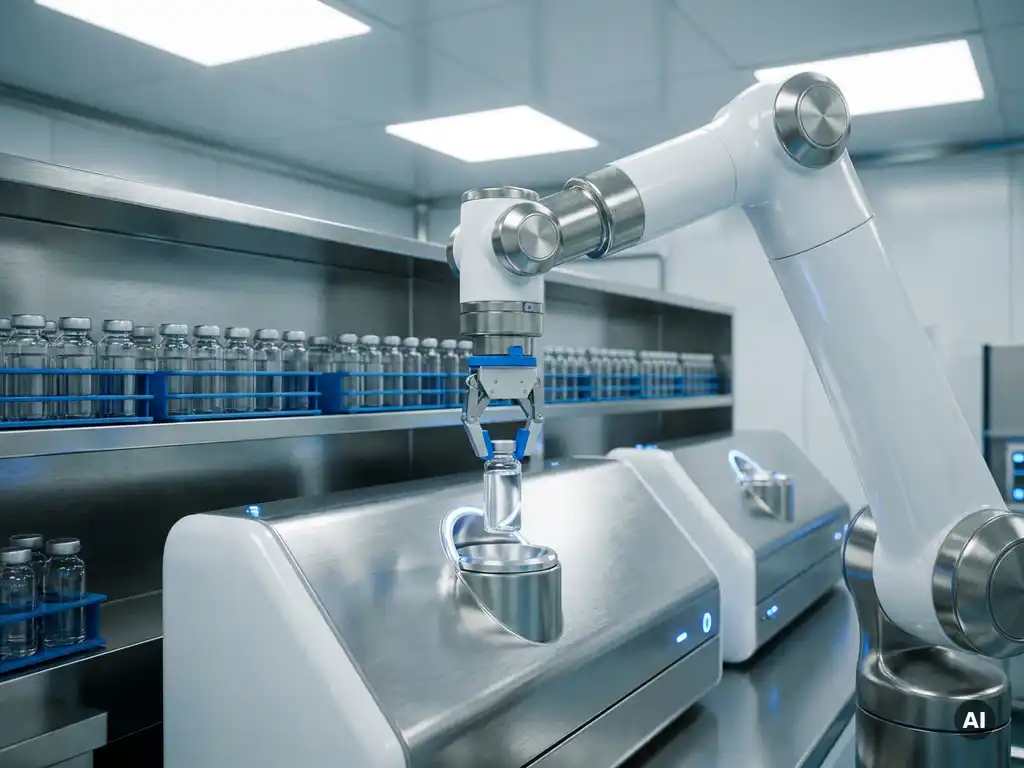
Full automation preserves sample integrity more reliably than manual preparation. When human handling is removed from critical steps like extraction, cleanup, and solvent transfer, the variables that most commonly compromise sample quality, contamination, inconsistent technique, and operator error, are either eliminated or tightly controlled. For laboratories analyzing trace-level persistent organic pollutants, this is not a minor improvement; it is a fundamental shift in analytical reliability. The questions below unpack exactly how automation delivers that outcome across contamination risk, solvent exposure, reproducibility, matrix compatibility, and the boundaries of what automated systems can achieve.
How does full automation change the risk of sample contamination?
Full automation eliminates the most common source of cross-contamination in sample preparation: direct human and instrument contact with the sample. In a fully automated workflow, samples move through extraction and cleanup without touching shared surfaces between runs, and without operator hands introducing environmental contaminants. The result is a structurally lower contamination risk compared to manual or semi-automated methods.
In manual workflows, contamination enters through shared glassware, inadequately cleaned tubing, solvent carryover between runs, and incidental contact during transfers. Each of these pathways represents a risk that compounds across a high-throughput batch. Automated systems address this by design. Systems like the GO-EHT platform, for example, are engineered so that samples do not come into direct contact with the instrument itself, which removes the mechanism by which one sample could contaminate the next.
This matters most in the analysis of persistent organic pollutants such as dioxins, PCBs, and PBDEs, where target analytes are present at picogram or femtogram levels. At those concentrations, even trace carryover from a previous sample can produce a false positive or skew quantification. Automated sample cleanup systems that prevent instrument-to-sample contact solve this problem structurally rather than relying on cleaning protocols between runs.
What happens to solvent exposure when preparation is automated?
Automated sample preparation significantly reduces the volume of organic solvents used per sample and minimizes operator exposure to those solvents. Modern automated systems are engineered to complete extraction and cleanup using less than 100 ml of solvent per sample, without requiring aggressive solvents like dichloromethane that carry additional health and environmental risks.
In manual workflows, solvent use is difficult to standardize. Operators add solvents by hand, volumes vary between runs, and evaporation during open handling adds uncontrolled exposure. Automated systems dispense precise volumes at each step, recover solvents where possible, and keep the process closed. The SER-158 extraction system, for instance, simultaneously concentrates samples during extraction and routes solvents to a recovery tank, which reduces both residual solvent volume and the time required for downstream concentration steps.
The environmental benefit is equally significant. Laboratories running high sample volumes can dramatically reduce their total solvent waste over the course of a year. This aligns with tightening regulatory expectations around laboratory sustainability in Europe and supports laboratories that are working toward greener analytical workflows without sacrificing analytical performance.
Does automation affect reproducibility across sample batches?
Automation improves reproducibility by removing operator variability from every repeated step. When extraction conditions, solvent volumes, timing, and flow rates are controlled by a programmed system rather than a human technician, the variation between samples in the same batch and between batches run on different days is substantially reduced. This is one of the clearest performance advantages of laboratory automation in analytical chemistry.
Reproducibility matters most in regulated testing environments. ISO 17025-accredited laboratories must demonstrate that their methods produce consistent results across analysts, instruments, and time. Manual preparation introduces analyst-to-analyst variation that is difficult to quantify and harder to eliminate. Automated systems apply the same conditions to every sample, every time, which makes method validation more straightforward and inter-laboratory comparisons more meaningful.
Peer-reviewed validation work supports this. Research published at Dioxin2016 by Fujita et al. demonstrated that fully automated sample preparation for simultaneous dioxin, PCB, and PBDE analysis met validation criteria, confirming that automation can match or exceed the reproducibility of manual methods in demanding multi-analyte workflows. For laboratories processing large batches of food, feed, or environmental matrices, this consistency directly translates into more defensible results and fewer repeat analyses.
Which sample matrices are compatible with fully automated preparation?
Fully automated sample preparation systems are compatible with a wide range of matrices, including food, feed, soil, sewage sludge, water, and air. The specific system configuration determines which matrices can be processed, but modern automated platforms are designed to handle both solid and liquid sample types, often within the same instrument family.
For solid and semi-solid matrices such as soil, sludge, and food products, extraction-based systems handle initial solvent extraction before the cleaned extract moves into automated purification. For aqueous matrices like drinking water, surface water, and wastewater, large-volume SPE automation is the appropriate approach. Systems such as the AutoEmpore are specifically designed for this, supporting multiple disk sizes and cartridge formats to accommodate the volumes typically required when analyzing PFAS, pesticides, hormones, and other emerging contaminants in water.
The breadth of matrix compatibility is particularly relevant for contract and environmental testing laboratories that routinely receive diverse sample types. Rather than maintaining separate manual workflows for each matrix type, laboratories can consolidate preparation into automated platforms that handle the full range of incoming samples with consistent performance.
What are the limits of automated sample preparation for trace-level analysis?
Automated sample preparation is highly effective for trace-level analysis, but it is not without boundaries. The main practical limits are method-specific selectivity requirements, the need for careful system qualification, and the upfront investment in programming and validation before a new method can be run reliably at scale.
At ultra-trace concentrations, the cleanup selectivity of the automated system must match the complexity of the matrix. Highly lipid-rich matrices such as fatty fish or animal feed require more aggressive cleanup to remove co-extracted interferences before mass spectrometry measurement. Research by Hayward and Traag (2020) addressed exactly this challenge, describing approaches for removing co-extracted lipids ahead of POP measurement in foods. Automated systems can be configured to perform multi-step cleanup, but the method must be appropriately designed for the matrix and validated before routine use.
A second limit is that automation does not replace method expertise. The system executes a defined protocol with precision, but the protocol itself must be correct. Errors in method design, incorrect column selection, or inappropriate solvent sequences will be reproduced consistently by the automated system rather than caught by an attentive analyst. This means laboratories transitioning to automated workflows need strong method development support, particularly when extending automation to new matrices or analyte groups.
Finally, not every low-throughput or highly specialized analysis justifies full automation. For single-sample forensic work or novel research matrices, the time required to develop and validate an automated method may outweigh the benefit. Automation delivers its greatest value in routine, high-throughput testing where reproducibility and throughput are the primary drivers.
How DSP-Systems supports automated sample preparation workflows
DSP-Systems supplies and configures automated sample preparation systems for laboratories analyzing persistent organic pollutants and environmental contaminants across Europe and North America. Their offering directly addresses the questions raised in this article:
- Cross-contamination elimination: The GO-EHT platform prevents direct sample-to-instrument contact, structurally removing the primary contamination pathway in dioxin, PCB, PBDE, and PCN analysis.
- Reduced solvent use: Systems operate with less than 100 ml of solvent per sample and without dichloromethane, supporting both operator safety and laboratory sustainability goals.
- High reproducibility: Fully programmed workflows deliver consistent extraction and cleanup conditions across every sample in a batch and across batches over time.
- Broad matrix compatibility: The system portfolio covers solid matrices via the SER-158 extractor, aqueous matrices via the AutoEmpore, and high-throughput SPE via the SPE2000, handling food, feed, soil, water, sludge, and air samples.
- Method development support: DSP-Systems assists laboratories with method development, validation, and configuration against EPA and CEN standards, reducing the risk of errors during the transition to automation.
If your laboratory is evaluating automated sample preparation or looking to improve sample integrity in contaminant analysis, contact DSP-Systems to discuss which system configuration fits your matrix types and throughput requirements.
Veelgestelde vragen
How do I know if my laboratory is ready to transition from manual to fully automated sample preparation?
Readiness largely depends on your throughput volume, method maturity, and available technical support. If your laboratory regularly processes batches of 20 or more samples using established methods for matrices like food, feed, soil, or water, the conditions are right for automation to deliver measurable gains in efficiency and reproducibility. Before transitioning, ensure you have access to method development expertise — either in-house or through your system supplier — to properly configure and validate the automated workflow for your specific analytes and matrices.
What is the difference between semi-automated and fully automated sample preparation, and does it matter for trace-level POPs analysis?
Semi-automated systems typically automate one or two steps — such as SPE cleanup — while still requiring manual handling for extraction, solvent transfers, or sample loading. Fully automated systems execute the entire preparation sequence, from extraction through cleanup and concentration, without operator intervention between steps. For trace-level POP analysis at picogram or femtogram concentrations, this distinction is critical: each manual touchpoint is a potential contamination or variability event, and only full automation structurally eliminates those risks across the entire workflow.
Can automated sample preparation systems be validated against EPA and CEN regulatory standards?
Yes, automated sample preparation workflows can be validated against EPA methods (such as EPA 1613, 1668, and 8270) and CEN standards relevant to dioxins, PCBs, and other persistent organic pollutants. The key requirement is that the automated method produces results that meet the precision, accuracy, and recovery criteria defined by the applicable standard. Suppliers like DSP-Systems specifically support method validation and configuration against these regulatory frameworks, which significantly reduces the burden on the laboratory during the qualification process.
What happens if a sample fails cleanup during an automated run — does the whole batch need to be repeated?
Modern automated sample preparation platforms include monitoring and flagging capabilities that can isolate a problematic sample without compromising the rest of the batch. Depending on the system design, a failed or flagged sample can often be reprocessed individually rather than requiring a full batch repeat. However, root cause investigation is important — a recurring failure on a specific matrix type usually signals that the method parameters, such as cleanup column selection or solvent sequence, need adjustment for that sample type.
How does automation handle highly lipid-rich matrices like fatty fish or animal feed without compromising cleanup selectivity?
Highly lipid-rich matrices require multi-step cleanup to remove co-extracted fats and oils before mass spectrometry measurement, and automated systems can be configured to execute these additional cleanup stages in sequence. The critical factor is method design: the column selection, solvent volumes, and elution sequence must be specifically optimized for high-lipid matrices and validated before routine use. Research such as the Hayward and Traag (2020) work on co-extracted lipid removal in POP analysis provides a scientific basis for these configurations, and experienced system suppliers can guide laboratories through the appropriate setup.
Is there a minimum sample throughput that makes full automation cost-effective?
While there is no universal threshold, most laboratories find that full automation becomes cost-effective when processing 500 or more samples per year using the same method, or when running regular batches of 10–30 samples at a time. At lower volumes, the time invested in method development and system validation may not be recovered through efficiency gains alone. That said, laboratories should also factor in the indirect costs of manual workflows — repeat analyses, analyst time, solvent disposal, and QC failures — which automation consistently reduces regardless of throughput.
What maintenance and qualification requirements should laboratories expect when running fully automated sample preparation systems?
Automated sample preparation systems require routine maintenance such as tubing inspection, valve and pump performance checks, and solvent line cleaning — typically on a schedule defined by the manufacturer based on usage volume. For regulated laboratories, periodic system qualification (IQ, OQ, PQ) is also necessary to demonstrate that the instrument is performing within validated parameters. Most reputable suppliers provide qualification documentation and support, and because automated systems apply consistent conditions to every run, performance drift is generally easier to detect and diagnose than in manual workflows.
Gerelateerde artikelen
- What are the risks of poorly automated sample preparation in regulated labs?
- How does automated sample preparation fit into a fully digitized laboratory?
- How do you build a business case for laboratory automation in 2026?
- Can automated sample preparation reduce solvent consumption?
- How does automation help labs meet regulatory compliance requirements?
Deze inhoud is gegenereerd met behulp van AI en kan fouten bevatten.