

How do automated labs perform during audits and inspections?
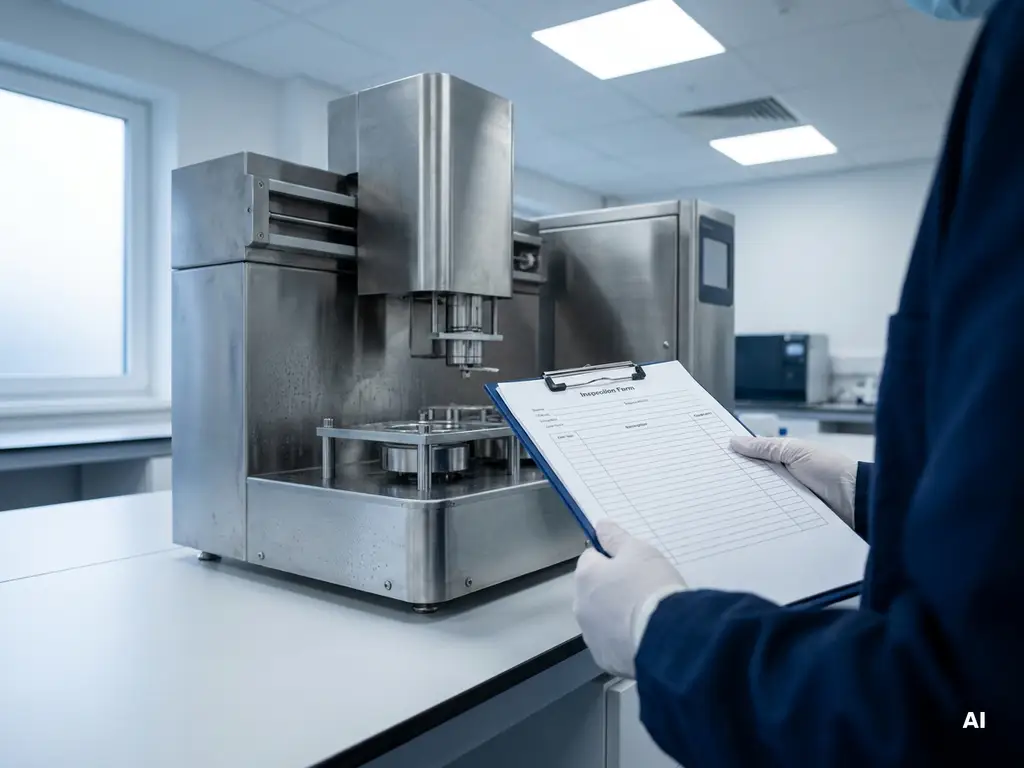
Automated labs consistently outperform manual laboratories during audits and inspections. Because automated systems enforce standardized workflows, generate traceable electronic records, and eliminate many sources of human error, they arrive at inspection day with a structural advantage that manual processes simply cannot match. The sections below address the most common questions laboratories have about audit readiness, ISO 17025 compliance, and what inspectors actually look for when they evaluate automated sample preparation environments.
What makes automated labs easier to audit than manual ones?
Automated laboratories are easier to audit because their processes are inherently reproducible and systematically documented. Every instrument action is logged, every parameter is time-stamped, and every deviation from a defined method is recorded automatically, removing the ambiguity that makes manual lab audits difficult and time-consuming. Auditors can verify compliance by reviewing data rather than relying on operator testimony.
In a manual laboratory, the quality of a result depends heavily on individual technique. Two analysts following the same written procedure may produce different outcomes, and tracing the source of a discrepancy requires reconstructing what each person did step by step. Automated systems remove that variability. A platform programmed to dispense a precise solvent volume, maintain a specific temperature, and process samples in a defined sequence will do so consistently across every run, every operator, and every day of the week.
This consistency translates directly into audit readiness. When an inspector asks whether a method was followed correctly, an automated lab can produce a complete, machine-generated run log that answers the question without interpretation. Instrument audit trails show what happened, when it happened, and whether it fell within validated parameters. That level of transparency is difficult to achieve, and even harder to maintain, in a fully manual environment.
How does automation support ISO 17025 compliance during inspections?
Automation supports ISO 17025 compliance by directly addressing the standard’s core requirements: method validation, measurement traceability, result reproducibility, and documented quality control. Automated systems generate the structured evidence that ISO 17025 inspectors expect to find, making it straightforward to demonstrate that a laboratory’s processes are under control.
ISO 17025 requires laboratories to demonstrate that their methods produce reliable, reproducible results and that staff competence is not the sole safeguard against error. Automated sample preparation systems address both demands. They execute validated methods with the same parameters every time, and they produce electronic records that serve as objective evidence of method adherence, independent of who operated the system on a given day.
Key areas where automation strengthens ISO 17025 compliance include:
- Measurement traceability: Automated systems record instrument settings, reagent lot numbers, and processing conditions, creating a complete chain of custody for every sample.
- Repeatability and reproducibility: Standardized, programmable workflows reduce within-laboratory variation, which is directly assessed during proficiency testing evaluations.
- Corrective action evidence: When a system flags an out-of-range result, the electronic record shows both the anomaly and the response, exactly what an ISO 17025 inspector needs to see.
- Calibration and maintenance records: Most automated platforms integrate maintenance scheduling and calibration logging, keeping these records current and easily retrievable during an inspection.
Laboratories working toward or maintaining ISO 17025 accreditation find that automated platforms reduce the administrative burden of compliance considerably, because much of the required documentation is generated as a by-product of normal operation rather than as a separate manual task.
What audit risks remain in automated laboratory environments?
Even well-automated laboratories carry audit risks, primarily in the areas of software validation, user access control, and the gap between what a system is programmed to do and what it is actually validated to do. Automation reduces human error in execution, but it does not eliminate the need for rigorous oversight of the systems themselves.
The most common audit findings in automated labs include:
- Unvalidated software changes: Any modification to an instrument’s control software or method parameters must be validated and documented. Inspectors frequently flag changes made without a formal change-control record.
- Inadequate user access controls: If multiple staff members share login credentials or if the system does not restrict who can modify method parameters, the integrity of the audit trail is compromised.
- Gaps between the validated method and the programmed method: A system may be programmed correctly for routine use but not reflect the exact conditions under which the method was originally validated, a discrepancy that inspectors are trained to identify.
- Instrument qualification records: Installation qualification (IQ), operational qualification (OQ), and performance qualification (PQ) documentation must be current. Automated equipment that lacks up-to-date qualification records presents a significant audit vulnerability.
- Operator training records: Automation reduces reliance on individual skill, but operators still need documented training on system use, troubleshooting, and data review. Missing training records remain a common finding.
Understanding these risks allows laboratory managers to address them proactively rather than discover them during an inspection.
How do inspectors evaluate automated sample preparation systems?
Inspectors evaluate automated sample preparation systems by assessing whether the system is fit for purpose, properly validated, maintained in a qualified state, and operated within a documented quality framework. They examine both the physical system and the data it generates, looking for consistency between what the method specifies and what the system actually does.
During a laboratory inspection, an assessor reviewing an automated sample preparation platform will typically examine:
- The instrument’s qualification documentation (IQ, OQ, PQ) and the dates of the most recent qualifications
- Method validation reports confirming that the automated workflow produces results that meet the performance criteria required by the relevant standard (such as EPA 1613B, EPA 1668A, or EU Commission Regulation criteria)
- Maintenance and calibration logs, including any corrective actions taken after instrument failures
- A representative selection of run logs to verify that actual operating parameters match those specified in the validated method
- Blank and recovery standard results to confirm that the system is performing within acceptance criteria
For systems used in the analysis of persistent organic pollutants such as dioxins, PCBs, and PFAS, inspectors pay particular attention to cross-contamination controls. Automated platforms that process samples without direct sample-to-system contact, meaning the sample never touches the instrument’s internal surfaces, offer a demonstrable advantage here, because the risk of carryover between samples is structurally eliminated rather than managed through cleaning procedures alone.
What documentation should automated labs prepare before an inspection?
Before an inspection, automated laboratories should prepare a structured documentation package covering instrument qualification, method validation, operator training, maintenance history, and quality control data. Having this documentation organized and immediately accessible is itself a positive indicator of laboratory management quality and significantly shortens the time an inspector needs to spend on administrative review.
A practical pre-inspection documentation checklist for automated labs includes:
- Instrument qualification records: Current IQ, OQ, and PQ certificates for every automated system, with clear dates and the name of the qualified person who performed each qualification.
- Method validation reports: Full validation data for each analytical method run on the automated platform, including linearity, recovery, repeatability, reproducibility, and detection limits.
- Standard operating procedures (SOPs): Up-to-date SOPs for system operation, routine maintenance, troubleshooting, and data review, version-controlled and signed by the responsible person.
- Calibration and maintenance logs: A complete record of all scheduled and unscheduled maintenance, including the outcome of each intervention and any corrective actions taken.
- Operator training records: Evidence that every person who operates the system has received documented training appropriate to their role.
- Recent QC data: A summary of ongoing quality control performance, including blank results, recovery standards, and any proficiency testing results from the past 12 months.
- Change-control records: Documentation of any changes made to methods, software, or instrument configuration since the last inspection, including the rationale and revalidation data where applicable.
Laboratories that maintain this documentation continuously, rather than assembling it in the weeks before an inspection, are far better positioned to respond to inspector requests quickly and confidently.
Do automated labs perform better in proficiency testing schemes?
Automated laboratories generally perform better in proficiency testing schemes than their manual counterparts, particularly for complex matrices and low-concentration analytes. The primary reason is that automated sample preparation reduces the within-laboratory variation that causes results to drift from the assigned reference value, the most common source of unsatisfactory proficiency testing outcomes.
Proficiency testing evaluates whether a laboratory’s results fall within an acceptable range of a reference value, typically expressed as a z-score. Laboratories with high within-laboratory variation, caused by differences in analyst technique, inconsistent sample handling, or variable solvent volumes, are more likely to produce results that fall outside the acceptable window, even when their instrumentation is calibrated correctly.
Automated sample preparation eliminates many of these sources of variation. When the extraction, cleanup, and concentration steps are performed by a programmed system under controlled conditions, the preparation component of measurement uncertainty decreases. This tighter control over the pre-analytical phase means that the final measurement result more accurately reflects the true concentration in the sample, which is precisely what proficiency testing schemes are designed to assess.
For laboratories analyzing dioxins, PCBs, PFAS, and other persistent organic pollutants in food, feed, soil, and water, this advantage is especially meaningful. These analyses involve very low target concentrations, complex matrices, and multi-step cleanup procedures where small manual inconsistencies can have a disproportionate effect on the final result. Automated platforms that handle these steps reproducibly give laboratories a measurable edge in proficiency testing performance and, by extension, in maintaining their accreditation status.
How DSP-Systems supports audit-ready automated laboratory performance
DSP-Systems supplies and supports automated sample preparation systems specifically designed to help laboratories meet the demands of audits, inspections, and proficiency testing in contaminant analysis. Their offering addresses the practical audit requirements described throughout this article:
- Reproducible, documented workflows: Systems such as the GO-EHT purification platform execute validated methods consistently, generating the run logs and parameter records that inspectors require.
- Cross-contamination elimination: Because samples do not come into direct contact with the system, carryover risk is structurally removed, a point that holds up under direct inspector scrutiny.
- Minimal solvent use: Processing samples with less than 100 ml of organic solvent per run, without dichloromethane, simplifies waste documentation and supports compliance with increasingly strict environmental regulations.
- Method development and validation support: DSP-Systems works with ISO 17025 accredited laboratories to develop and validate methods across dioxins, PCBs, PFAS, PBDEs, PAHs, pesticides, and more, providing the validation documentation that underpins audit-ready operation.
- Turn-key lab setups and training: From pre-installation programming to operator training, DSP-Systems ensures that laboratories are fully equipped to operate automated systems correctly from day one.
If your laboratory is preparing for an accreditation inspection or looking to strengthen its automated sample preparation workflow, contact DSP-Systems to discuss which system configuration best fits your analytical scope and compliance requirements.
Veelgestelde vragen
How long does it typically take to transition a manual lab to an automated sample preparation workflow?
The timeline varies depending on the number of methods being transferred, the complexity of the matrices involved, and the extent of revalidation required, but most laboratories complete the transition within three to six months. This includes instrument installation and qualification (IQ/OQ/PQ), method development and validation on the automated platform, SOP updates, and operator training. Working with a supplier that offers turn-key setup support and method validation assistance, as DSP-Systems does, can significantly compress this timeline by reducing the trial-and-error phase of method transfer.
Can we use our existing validated methods on a new automated system, or do we need to revalidate from scratch?
In most cases, full revalidation is required when transferring a method to a new platform, because the automated system represents a different measurement process than the manual procedure it replaces. However, this does not necessarily mean starting from zero. If the core chemistry is unchanged and the automated system can be shown to produce equivalent or superior performance, a method comparison or partial revalidation approach is often acceptable to accreditation bodies. Your validation report should document the comparison data explicitly, as inspectors will look for evidence that the automated method has been independently verified rather than simply assumed to replicate the manual one.
What should we do if an automated run fails mid-sequence during a real sample batch?
The first step is to ensure the system logs the failure with a time-stamp and error code, which most modern automated platforms do automatically. Do not attempt to resume or reconstruct the run without first documenting the interruption in your corrective action records. Depending on your SOP, affected samples may need to be re-prepared from the beginning, and the root cause of the failure should be investigated and recorded before the next batch is processed. Inspectors specifically look for how laboratories handle instrument failures, so a well-documented corrective action response to a mid-run failure is actually an opportunity to demonstrate robust quality management rather than a liability.
How do we handle software updates or firmware upgrades without compromising our audit trail or validated state?
Any software or firmware update must be managed through a formal change-control process before it is implemented on a production system. This means assessing the potential impact of the update on validated methods, performing re-qualification (typically OQ and, where relevant, PQ) after the update is applied, and documenting the entire process including the rationale, the qualification results, and the sign-off by a responsible person. Running the updated system in parallel with the previous version on reference samples is a practical way to generate comparative data that supports the change-control record. Applying updates without this process is one of the most frequently cited audit findings in automated laboratory environments.
Is automated sample preparation suitable for low-throughput labs, or is it only cost-effective at high sample volumes?
Automated sample preparation delivers value at low throughput as well, though the primary benefit shifts from efficiency gains to reproducibility and compliance advantages rather than raw time savings. For laboratories that analyze complex matrices such as dioxins, PCBs, or PFAS, even a small number of samples per week can justify automation because the reduction in analyst-to-analyst variability directly improves proficiency testing performance and simplifies the audit documentation burden. The relevant calculation is not only cost per sample but also the cost of failed proficiency tests, non-conformances, and the staff time spent preparing manual audit documentation, all of which automation reduces regardless of throughput.
What is the best way to demonstrate operator competency for an automated system during an inspection?
Training records should document both the initial qualification of each operator and any refresher or system-update training completed since then. The most compelling evidence for an inspector combines a written training record with a practical competency assessment, such as a witnessed run or a documented evaluation of the operator’s ability to perform routine maintenance and interpret system outputs correctly. Training records should be linked to the specific system and software version the operator was trained on, because an upgrade or configuration change may require a supplementary training entry. Generic training records that do not reference the specific automated platform are a common gap that inspectors flag during laboratory assessments.
How do automated systems handle traceability for reagents and consumables used during sample preparation?
Most modern automated sample preparation platforms can be configured to prompt the operator to log reagent lot numbers, expiry dates, and consumable identifiers at the start of each run, embedding this information directly into the electronic run record. This creates an unbroken chain of traceability from the raw sample through to the prepared extract, which is a core requirement under ISO 17025. Laboratories should verify that their SOPs require this information to be entered for every batch and that the system’s audit trail captures it in a format that cannot be retroactively edited without generating a visible change record, ensuring the integrity that inspectors expect to see.
Gerelateerde artikelen
- How do you maintain and service an automated sample preparation system?
- How do automated systems ensure traceability throughout sample processing?
- What is the difference between automated and manual sample preparation?
- What types of samples can be processed with automation?
- What are the most common automated sample preparation techniques?
Deze inhoud is gegenereerd met behulp van AI en kan fouten bevatten.