
What is the difference between automated and manual sample preparation?
Automated sample preparation uses programmable instruments to perform extraction, cleanup, and concentration steps with minimal human intervention, while manual sample preparation relies on a laboratory analyst to carry out each step by hand. The core difference comes down to consistency, throughput, and resource efficiency. Automated systems remove operator variability from the equation, while manual methods depend entirely on the skill and attention of the individual performing the work. The sections below address the most common questions laboratories have when comparing these two approaches.
How does automated sample preparation actually work?
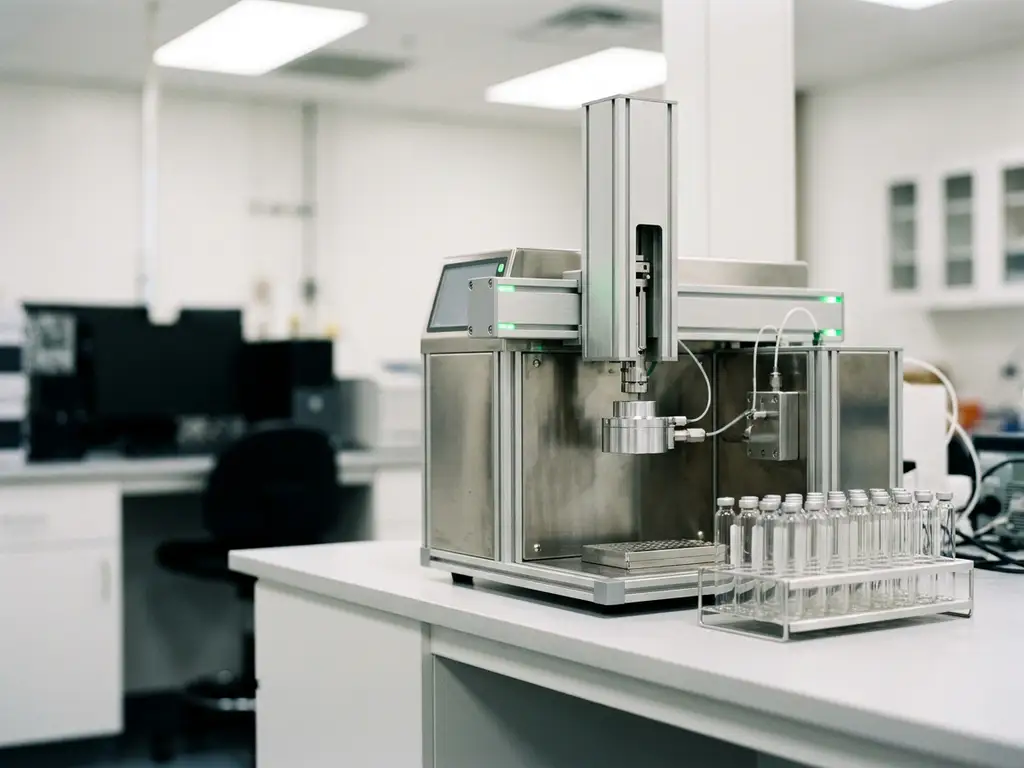
Automated sample preparation uses programmable laboratory instruments to execute extraction, purification, and concentration workflows in a defined, repeatable sequence without continuous operator involvement. Once a sample is loaded and the method is selected, the system carries out each step according to preset parameters, collecting fractions and transferring processed samples with no manual handling between stages.
In practice, this means an analyst loads a batch of samples, starts the run, and the instrument handles the rest. Systems like solid phase extraction (SPE) platforms, for example, automatically condition cartridges, pass samples through at controlled flow rates, wash away interferences, and elute the target compounds into collection vessels. More advanced platforms designed for persistent organic pollutants combine extraction and multi-layer cleanup in a single automated sequence, using programmed solvent volumes and timing to achieve consistent purification across every sample in a batch.
The key enabling technologies include precise syringe pumps, valve switching, fraction collectors, and method libraries that store validated protocols. Because the instrument follows the same instructions every time, the outcome of sample 1 and sample 80 in a batch is functionally identical, something that is very difficult to achieve by hand over a full working day.
What are the main limitations of manual sample preparation?
The main limitations of manual sample preparation are operator variability, low throughput, high solvent consumption, and significant health and safety risks. Because every step depends on human execution, results can differ between analysts, between laboratories, and even between runs performed by the same person on different days.
Manual extraction and cleanup procedures are also time-consuming. A single Soxhlet extraction, for instance, can take many hours and requires the analyst to remain available to monitor the process. When a laboratory needs to process dozens of samples, manual workflows create bottlenecks that directly limit analytical capacity.
Solvent use is another significant concern. Traditional manual methods routinely consume hundreds of milliliters of organic solvents per sample, including hazardous reagents such as dichloromethane. This creates occupational exposure risks, increases waste disposal costs, and conflicts with sustainability goals that are increasingly important to laboratories operating under modern regulatory expectations.
Finally, manual handling increases the risk of cross-contamination. Every time an analyst transfers a sample or handles labware, there is a possibility of introducing trace-level contamination, which is especially problematic when working with ultra-trace analytes like dioxins or PFAS, where even nanogram-level contamination can compromise a result.
Which sample preparation method produces more reproducible results?
Automated sample preparation consistently produces more reproducible results than manual sample preparation. Reproducibility in analytical chemistry depends on performing each procedural step the same way every time, and automated instruments are inherently better at this than human operators working under real laboratory conditions.
In manual workflows, small differences in technique, such as how quickly a solvent is added, how long a mixture is agitated, or how completely a layer is transferred, accumulate across a sample batch and introduce variability into the final measurements. These differences are not always visible in quality control checks but can inflate uncertainty values and reduce the comparability of results over time.
Automated systems eliminate this source of variation. The instrument applies the same pressure, the same timing, and the same solvent volumes to every sample in a sequence. This is particularly valuable in regulated environments where laboratories must demonstrate method performance to ISO 17025 standards or meet criteria set by food safety and environmental monitoring regulations. When method validation data is generated on an automated platform, the reproducibility achieved during validation is the reproducibility the laboratory can expect in routine operation, which is rarely true of manual methods.
How do automated systems reduce solvent consumption compared to manual methods?
Automated sample preparation systems reduce solvent consumption by optimizing the volume and delivery of solvents at each step, eliminating the excess that manual methods typically require to compensate for imprecision. While manual procedures often use several hundred milliliters of organic solvent per sample, well-designed automated systems can complete extraction and purification using less than 100 milliliters per sample.
This reduction is possible because automated instruments deliver solvents through precision pumps at controlled flow rates, ensuring complete contact between the solvent and the sample matrix without the need for excess volume. In manual workflows, analysts tend to use more solvent than strictly necessary to ensure adequate recovery, because the consequences of under-extracting a sample are worse than the cost of using extra reagent.
The environmental and practical benefits of this reduction are substantial. Lower solvent volumes mean less hazardous waste to dispose of, reduced chemical purchasing costs, and a safer working environment with less vapor exposure. Critically, modern automated platforms for persistent organic pollutant analysis have eliminated the need for dichloromethane entirely, replacing it with less toxic solvent combinations that still achieve the required recovery rates. This shift aligns with green chemistry principles and helps laboratories meet increasingly strict occupational health requirements without sacrificing analytical performance. You can explore automated sample preparation systems that achieve this balance across a range of applications.
What types of samples and contaminants are suited to automation?
Automated sample preparation is suited to a wide range of sample matrices and target contaminants, particularly where trace-level accuracy, regulatory compliance, and high sample volumes are required. The technology is especially well-established for environmental contaminants including dioxins, PCBs, PBDEs, PFAS, PAHs, pesticides, and hormones across matrices such as food, feed, soil, water, sewage sludge, and air.
Solid and semi-solid matrices that require solvent extraction before cleanup are well-handled by automated extraction systems, which can process multiple samples simultaneously using validated methods. Water samples, including large-volume environmental water requiring pre-concentration, are effectively processed by automated SPE platforms that handle online filtration and water removal as part of the same workflow.
For contaminants that require multi-step cleanup, such as the removal of co-extracted lipids before measuring dioxins or PCBs in fatty food matrices, automated purification systems are particularly valuable. These workflows involve sequential passage through multiple sorbent layers, a process that is tedious and error-prone when done manually but straightforward for a programmed instrument to execute consistently across an entire batch.
Automation is less commonly applied to highly specialized or non-routine analyses where method development is still ongoing, or where sample volumes are very small and batch sizes do not justify the setup time. However, for any laboratory running the same contaminant analysis repeatedly across similar matrices, automation is almost always the more practical choice.
When should a laboratory switch from manual to automated sample preparation?
A laboratory should consider switching from manual to automated sample preparation when throughput demands exceed what analysts can sustain without errors, when reproducibility between runs is inconsistent, or when solvent use and analyst exposure have become operational or regulatory concerns. These pressures often appear together as a laboratory grows its testing volume.
Specific indicators that automation is warranted include:
- Sample backlogs that regularly push turnaround times beyond acceptable limits
- Inter-analyst variability showing up in proficiency testing or internal quality control data
- High solvent consumption that creates significant waste disposal costs or occupational health concerns
- Regulatory requirements that demand tighter method performance criteria than manual workflows can reliably deliver
- Analyst time being consumed by repetitive, low-sill preparation steps rather than higher-value analytical work
The investment in automation should be evaluated against the total cost of the manual alternative, including analyst time, solvent and consumable costs, error rates, and the value of throughput gains. For laboratories analyzing persistent organic pollutants or PFAS in regulated matrices, the case for automation is typically strong because the analytical stakes are high and the regulatory scrutiny is significant.
Laboratories that are new to automation do not need to replace all manual steps at once. Many start by automating the most labor-intensive or error-prone stage, such as SPE cleanup, and expand from there as confidence in the technology grows.
How DSP-Systems helps laboratories make the switch to automated sample preparation
DSP-Systems supports laboratories at every stage of the transition from manual to automated sample preparation, from selecting the right system to validating methods and providing ongoing technical support. Their offering covers the full workflow, including:
- Automated extraction systems such as the SER-158, which processes up to six solid or semi-solid samples in 23 hours using less than 100 mL of solvent per sample
- Automated SPE platforms including the SPE2000, capable of processing up to 80 samples per run across a wide range of cartridge formats and sample volumes
- Purification systems such as the GO-EHT, which eliminates cross-contamination risk and removes the need for dichloromethane in dioxin and PCB analysis
- Concentration and evaporation solutions that integrate with upstream extraction and cleanup steps to complete the sample preparation workflow
- Method development and validation support for contaminants including dioxins, PCBs, PFAS, PAHs, pesticides, and more
Whether you are setting up a new laboratory or modernizing an existing one, DSP-Systems provides the expertise and equipment to make the transition straightforward and successful. Contact DSP-Systems to discuss which automated sample preparation solution fits your laboratory’s specific needs.
Gerelateerde artikelen
- Can laboratory automation be leased instead of purchased outright?
- Can automated sample preparation reduce solvent consumption?
- Why is laboratory automation important for modern analytical labs?
- Why do labs struggle to justify automation budgets to procurement teams?
- What are the hidden costs of manual sample preparation?
Deze inhoud is gegenereerd met behulp van AI en kan fouten bevatten.